The pipes must be replaced during a renovation when a house is over 30-35 years old without any work having been done, when lead is present (which is prohibited in drinking water systems), when galvanized iron shows signs of rust, or when asbestos cement downpipes have reached their 30-40 year lifespan. Replacing the entire interior plumbing system of an average-sized house costs between €2,000 and €4,500, and up to €8,000 or more in larger homes. Skipping this step will require tearing up the new flooring two years later.
When should the pipes in a house be replaced?
There are five signs that make replacement compulsory rather than optional. If any one of them appears, changing the pipework stops being a budget decision.
- The house has lead pipes, which are now prohibited in drinking water installations.
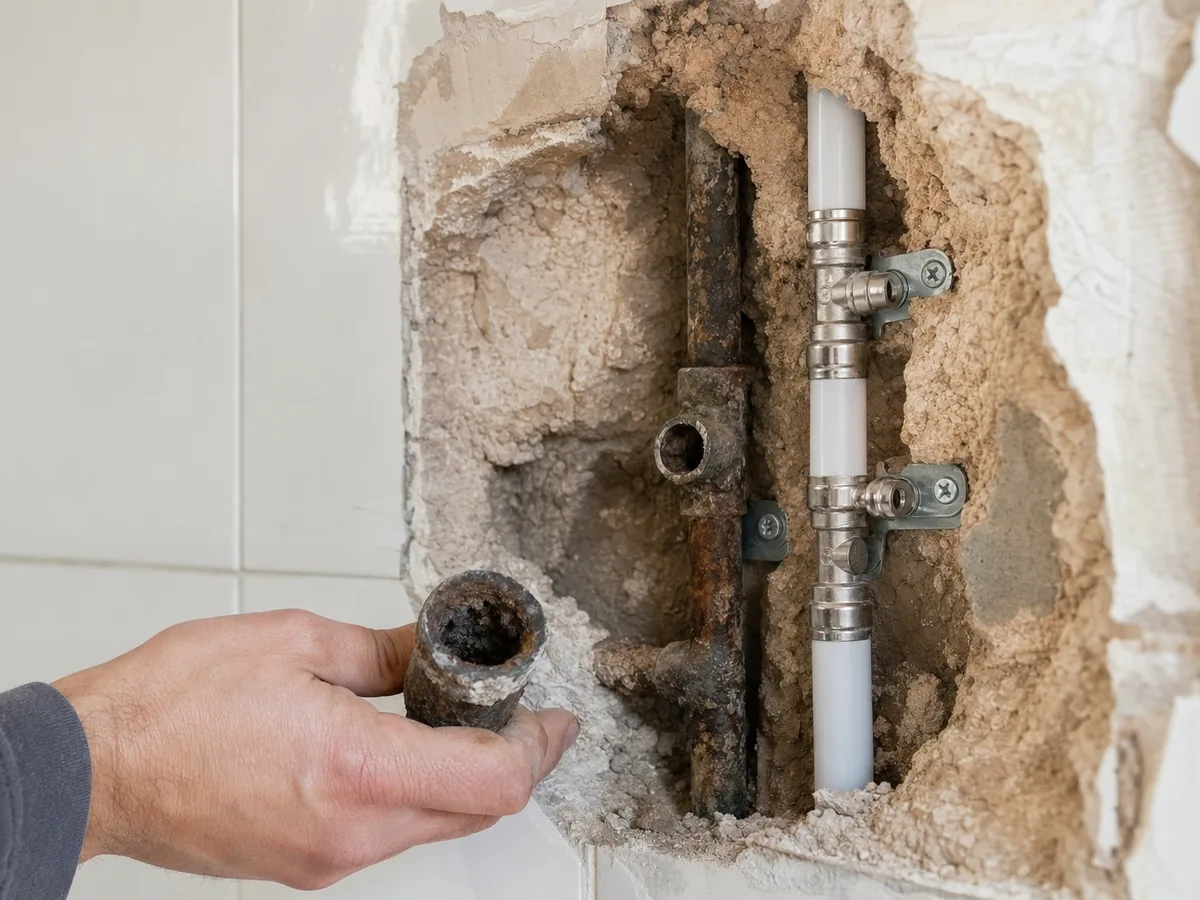
- There is galvanized iron that is over 30-35 years old, which is becoming strangled from the inside with rust.
- The downpipes are made of asbestos cement and have exceeded 30-40 years of useful life.
- There are pressure losses, cloudy water when opening after days, or recurring stains.
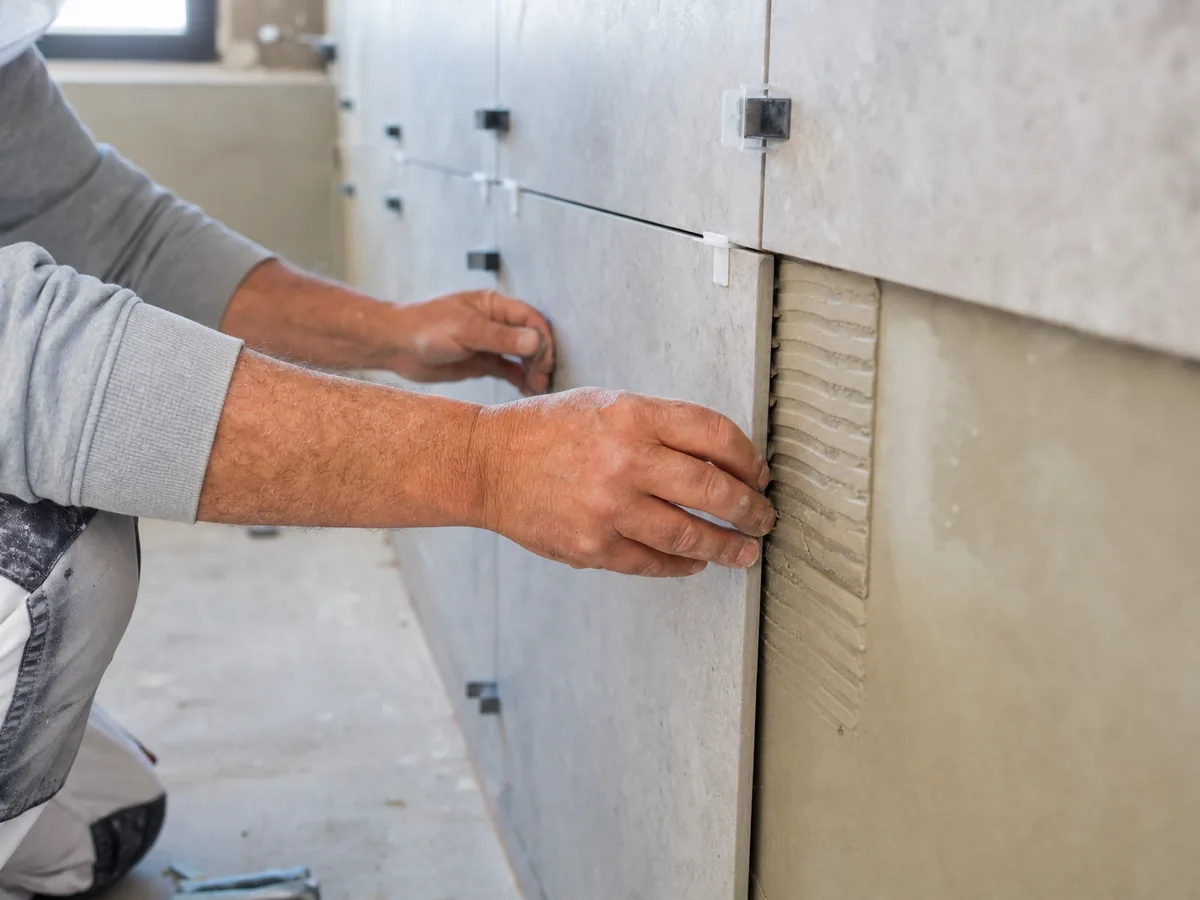
- The bathroom or kitchen will be renovated and the pipes will be behind the new tiling.
Point 5 is the one that saves the most money and is the most overlooked. If you're already doing the work, the marginal cost of renewing the plumbing is a fraction of what it would cost to do it separately in three years, when the newly laid tiles will need to be broken. The rule we apply: if it's being opened, it needs to be renewed.
What pipe material is used today and how long does it last?
In residential properties, multilayer and PEX pipes are primarily used, with an estimated lifespan of around 50 years and quick installation via mechanical connections. Copper remains a viable and very durable option, but it is more expensive in terms of both material and labour.
| Material | Approximate useful life | Current situation |
|---|---|---|
| Multilayer (PE-AL-PE) | ~50 years | Standard in new housing and renovation |
| PEX (cross-linked polyethylene) | ~50 years | Standard, widely used in interior distribution |
| Copper | 40-60 years | Valid; higher cost of materials and assembly |
| Galvanized iron | 30-40 years | Obsolete: obstructed by internal rust |
| Lead | — | Prohibited in drinking water |
| Fiber cement (downpipes) | 30-40 years | Remove; may contain asbestos |
Lead deserves a separate mention. In homes built before the 1970s in Mallorca, sections of lead pipe can still be found, especially in old service lines and risers. It is no longer permitted in drinking water systems, and its presence is sufficient reason to replace the pipes even if the system "is not causing any problems.".
How much does it cost to replace the pipes in a house?
Renovating the entire interior plumbing system of an average home costs between €2,000 and €4,500 when it involves chasing walls and replacing tiles. In small apartments, the range is €2,000 to €5,000, in medium-sized homes €5,000 to €8,000, and above €8,000 in large homes or those with many points of consumption.
| Scope | Estimated cost 2026 |
|---|---|
| Replace the service connection or an accessible section | €600 – €1,500 |
| Renovate interior installation of average home | €2,000 – €4,500 |
| Complete renovation in a small apartment | €2,000 – €5,000 |
| Complete renovation of a medium-sized house | €5,000 – €8,000 |
| Complete renovation of a large house | from €8,000 |
The hidden item that throws these quotes out is making good: opening chases throughout the home means afterwards replacing wall tiling, render and paint. When the renewal is done as part of a full renovation, that making good is already allowed for and the cost of the plumbing itself is far lower than it looks. You can see how it fits into the whole in full renovations in Mallorca: the real quote and what it includes.
Who pays for the downpipes: the owner or the community?
The building's main drainpipes are a common element, so their replacement is the responsibility of the homeowners' association, even if the section runs through an individual apartment. The private branch lines that connect your bathroom or kitchen fixtures to the main soil stack are yours to keep.
This boundary often causes conflict, and it's important to understand it clearly before starting a renovation: if a deteriorated main soil stack is discovered during the demolition, it's not an unforeseen issue with your project, it's a maintenance task for the building. And the necessary maintenance work is mandatory and doesn't require prior approval from the owners' meeting. We elaborate on this in which works require approval from the owners' meeting.
What you do need to do is document it: take a photo of the condition, write a report if necessary, and notify the building manager in writing before closing the wall. If you cover it up without warning, the problem will return and the situation will become much more complicated.
What precautions should be taken with asbestos cement downpipes?
If the asbestos cement contains asbestos, its removal can only be carried out by a company registered in the Register of Companies with Asbestos Risk (RERA), with an approved work plan, according to the Royal Decree 396/2006 on work involving exposure to asbestos. It's not a recommendation: it's a legal requirement and a matter of health.
In Mallorca, this material is frequently found in buildings from the 1960s to 1980s, as well as on roofs and in water tanks. Never break or cut the material while it's dry: it releases fibre when it's fragmented. If you discover an asbestos cement soil stack when opening a wall, stop work, cover it, and call an authorized company.
The criteria for compulsory removal are having exceeded the useful life —some 30-35 years from installation— or showing visible deterioration. The technical regulations for water drainage are in the CTE basic document on healthiness, section HS 5, available on the Technical Code website.
Is it possible to renovate the plumbing without tearing up the whole house?
Partly, yes. There are two strategies that greatly reduce the amount of demolition: running the new distribution through a false ceiling or plasterboard partition instead of through a chase in the wall, and replacing only the accessible studs and branches, leaving the sections in good condition in load.
The first option is the one we use most often in apartment renovations. If a false ceiling is already being installed in the hallway and bathrooms to accommodate lighting and air conditioning, the plumbing can be run through these areas with access panels, and chases are limited to the downpipes to each point of use. This reduces the amount of demolition, replacement work, and overall time required.
The second point has a limit that shouldn't be crossed: mixing old and new materials in the same installation creates a weak point within the system. If the old section is galvanized and rusty, replacing only half of it means having to replace it again in a few years. Partial replacement makes sense with copper in good condition, not with galvanized copper at the end of its lifespan.
It's worth coordinating this departure with the electric one, because both require opening: we explain it in renew the electrical installation in a renovation.
Frequently asked questions about changing pipes during a renovation
How often should the pipes in a house be replaced?
Modern multilayer, PEX, or copper pipes have a lifespan of 40 to 60 years, so in a home with a modern plumbing system, they don't need to be replaced due to their age. The problem lies with galvanized iron pipes, which become clogged with rust after 30-35 years, and with lead pipes, which must always be replaced. If a home is over 35 years old without any updates, it should be inspected.
How much does it cost to replace all the pipes in an apartment?
Between €2,000 and €5,000 for a small apartment and between €5,000 and €8,000 for a medium-sized home, including chasing, tiling, and painting. Replacing only the main water line or an accessible section costs between €600 and €1,500. The cost is significantly lower if the renovation is part of a complete refurbishment, as the replacement is already included.
How do I know if my home has lead pipes?
Lead is a soft, dull gray metal—it can be scratched with a fingernail—with rounded, bulging solder joints. It's most commonly found in homes built before the 1970s, in older water mains and risers. The most reliable way to check for lead is to have a plumber inspect accessible points: the water metre, the water inlet, and under the sink. If lead is present in the drinking water system, it must be replaced.
Do the pipes need to be replaced when only renovating the bathroom?
If the property is over 30 years old and the plumbing has never been touched, then yes: now is the time to do it, because the pipes will be hidden behind the new tiling and having to open them up again in a few years would be much more expensive. If the installation is recent and in good condition, it's enough to replace the branch lines to the appliances. Our rule is simple: if you have to open things up for renovations, replace what's hidden.
We checked it before closing the wall
When we renovate a bathroom or kitchen, we check the condition of the plumbing before tiling and tell you clearly whether it's worth replacing, including a price. It's the cheapest item to do during the project and the most expensive to replace afterward. We are a comprehensive renovation company in Palma with three generations in the trade, fixed labour prices, a one-year warranty on renovations and two years on materials, and 100% financing. If the plumbing is for a new bathroom or kitchen, you'll find the details at kitchen renovations in Mallorca.