In Mallorca there are three types of damp and each one is resolved differently: rising damp coming up from the ground in marés and stone houses, condensation in homes shut up for months at a time, and water getting in through the roof or the façade. Treating rising damp by resin injection costs between €30 and €80 per linear metre, and a complete treatment runs from €1,400 to €5,500. What never works is damp-proof paint: it hides the stain and the water comes out a little higher up.
Why is there so much humidity in the houses of Mallorca?
Due to the combination of three factors that occur together on the island and rarely elsewhere: traditional construction in marés stone and masonry without a barrier against water from the ground, high relative humidity for almost the entire year, and a park of second homes that spends months closed and unventilated.
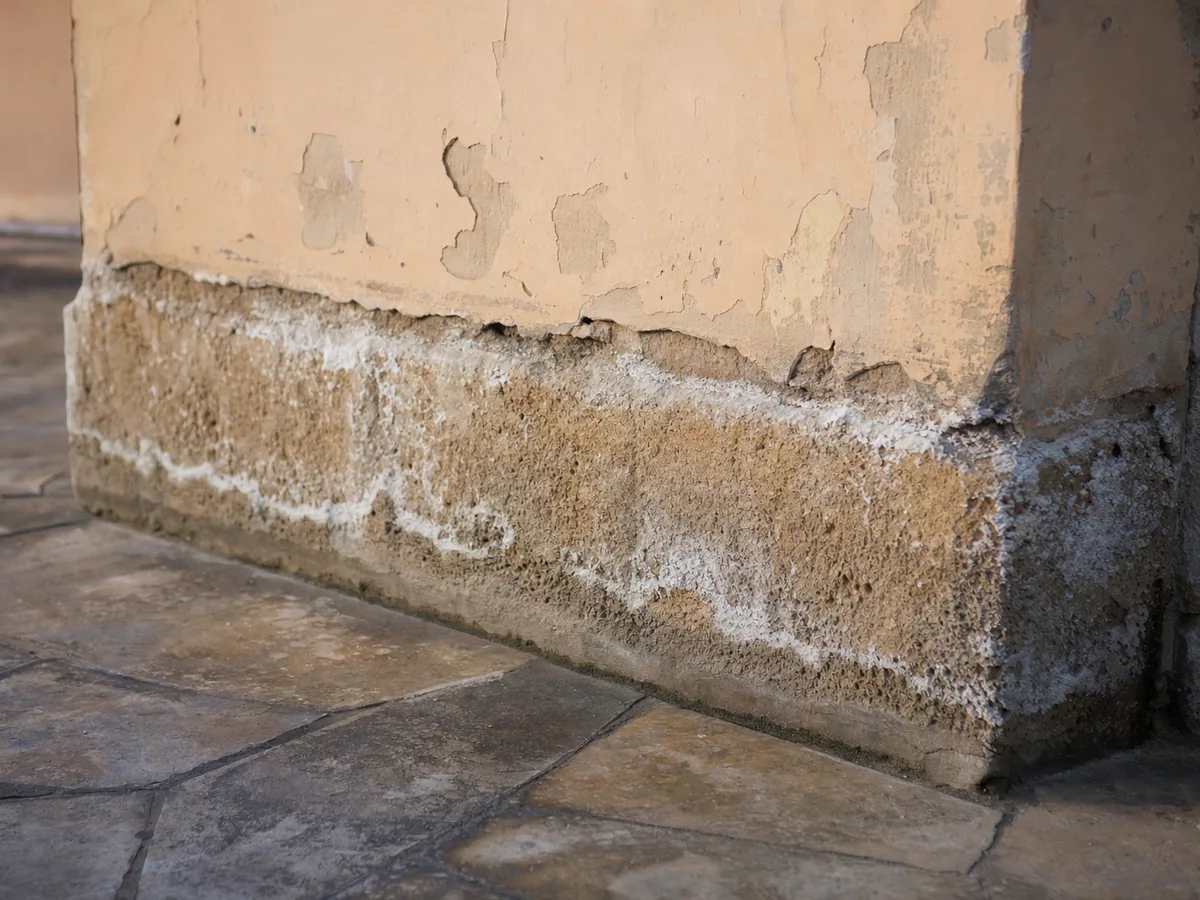
Marés is a porous sandstone. It performs very well structurally and is breathable, which is precisely its virtue, but it absorbs water from the ground through capillary action and draws it up the wall. In a town house in Llucmajor, Inca, or Sineu built eighty years ago, no one installed a waterproof membrane under the wall because it wasn't done then. So the water rises, and where it encounters evaporation, damp skirting, blistering paint, and crystallized saltpetre appear.
Added to this is the climate. With high humidity and cold walls, any poorly ventilated house will develop condensation. And a house closed up from October to May, without heating or air circulation, will develop a lot of condensation. This is why mould appears in so many coastal homes, inside closets and in the corners of north-facing rooms.
How can you distinguish capillary action from condensation?
They are distinguished by where they appear and how they behave. Capillary action always comes from below and does not go above a certain height; condensation appears at the top, in corners and cold spots, and worsens in winter when the house is closed up.
| Sign | Capillarity | Condensation | Filtration |
|---|---|---|---|
| Where does it appear? | Baseboard, first 80-150 cm of the wall | Corners, ceilings, behind furniture, cold spots | Under the roof, next to windows, on an exposed facade |
| When does it get worse? | All year round, but more so after rain | Winter and with the house closed up | During and after the rain |
| Aspect | Horizontal border, white saltpetre, convex paint | Spotted black mould, drops on glass | Stain with defined perimeter, sometimes dripping |
| What causes it? | Water from the ground rising up the wall | Lack of ventilation and thermal bridges | Waterproofing or joint failure |
The requirements for protection against moisture are regulated in section HS 1 of the basic document DB-HS of the Technical Building Code, approved by the Royal Decree 314/2006. In existing buildings it is not always possible to reach the standard of new construction, but it does set the technical criteria for what needs to be resolved.
Saltpeter is the most reliable indicator of capillary action: those white, powdery efflorescences are the salts from the soil that have been transported by water and are left behind after evaporation. If saltpetre is present, the water is rising from below, and no surface treatment will solve the problem.
How much does it cost to eliminate rising damp?
Professional treatment by injecting water-repellent resins costs between €30 and €80 per linear metre of treated wall, and a complete home treatment ranges from €1,400 to €5,500, with cases ranging from €600 for specific interventions to more than €7,000 for thick walls and large surfaces.
What affects the price within that range: the linear metres affected, the thickness of the wall —a 60 cm masonry wall requires much more resin than a partition wall—, the type of material, the height to which the moisture has reached, whether there is saltpetre that requires cleaning the coating and whether the floor is also affected.
When properly executed, an injection treatment maintains its effectiveness for 15 to 25 years. It seems expensive at first glance, but it's worth comparing it to the alternative: repainting every two years, losing the tiles or skirting, and in advanced cases, damaging wooden joists resting on the damp wall.
Which treatments actually work and which don't?
These are the ones that do solve the problem, depending on the type of humidity:
- Chemical barrier by injection at the base of the wall, to cut off capillary rise.
- Breathable sanitation mortars as a backing, which allows evaporation and does not accumulate salts.
- Dual-flow mechanical ventilation or humidity-controlled extraction, for condensation.
- Thermal bridge insulation and insulated wall lining, to eliminate cold surfaces where condensation occurs.
- Roof waterproofing and sealing of joints and woodwork, for leaks.
- Perimeter drainage, when the ground pours water against the wall.
And these are the ones that don't work, no matter how much they're sold: anti-humidity or waterproofing paint on the inside, which only displaces the water outlet a few centimetres higher; cement plaster on a marés stone wall, which prevents it from breathing and aggravates the problem by pushing the water upwards and inwards; and plasterboard placed directly on a wall with active capillary action, which becomes a hidden breeding ground for mould.
That last one is the one we have to undo most often. Someone covered a damp wall with plasterboard because it looked straight and clean, and two years later it all has to be removed, with the mould now widespread.
How do you deal with dampness in a stone house without damaging it?
With breathable materials and without ever sealing the wall. A wall of marés or masonry needs to evaporate; any solution that waterproofs it from the inside or outside traps the water inside the structure and forces it out at another point, usually higher up and causing more damage.
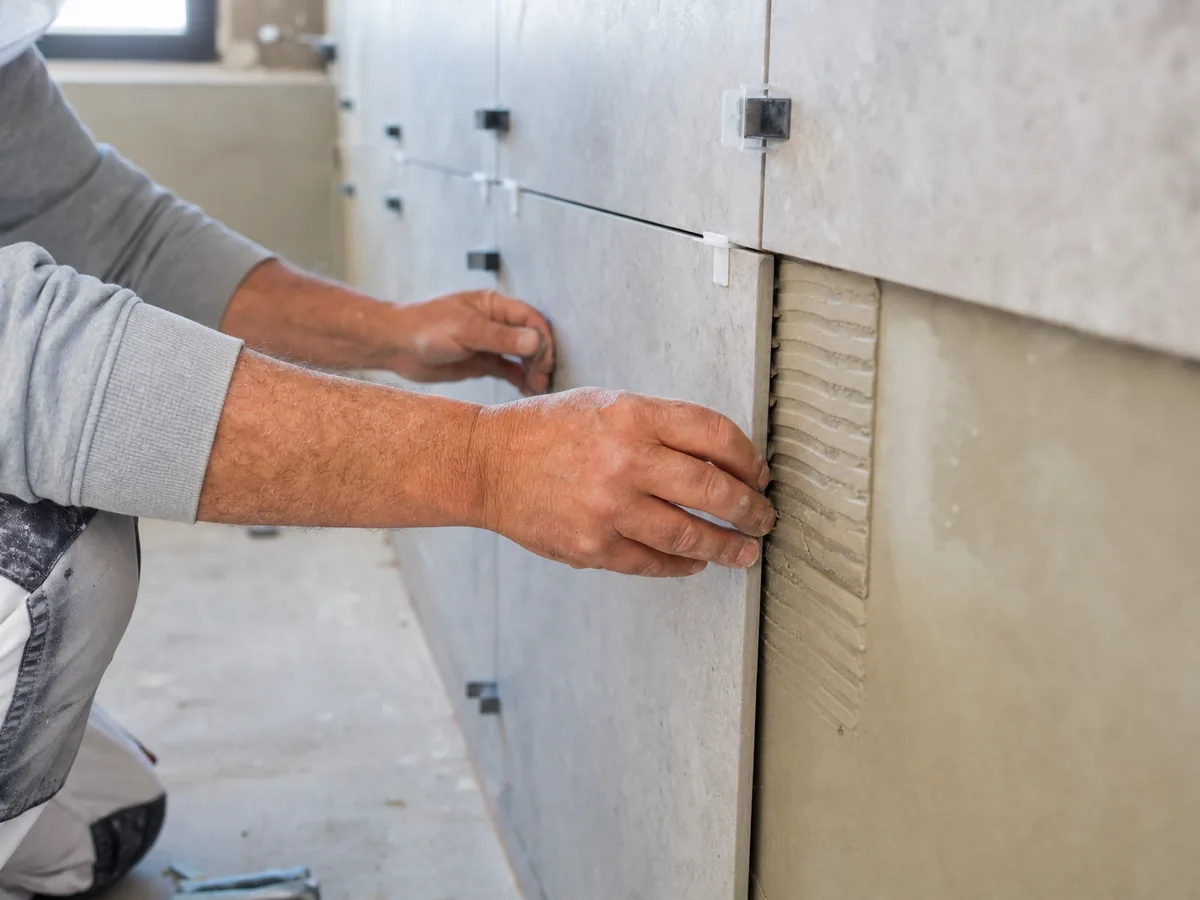
In practice, this means three concrete decisions: lime mortar instead of cement mortar for wall coverings, mineral silicate or lime paint instead of plastic paint, and foregoing watertight tiling or wall linings in areas of the wall that are dealing with moisture. In the traditional houses we renovate, the lower part of the wall is treated and allowed to breathe; the aesthetic is achieved with compatible finishes, not with a layer that covers it up.
That is exactly the criterion we apply to renovating a stone house in Mallorca, and it is one of the biggest differences between a well-planned renovation and one that looks good for six months.
What if the dampness is coming from the neighboring property or the building?
If the leak originates in a main soil stack, the roof, the facade, or a patio, it's a common element, and the repair is the responsibility of the homeowners' association, not the affected owner. Before spending money to treat the problem inside your home, you must locate the source.
The correct procedure is: locate the leak or point of entry through inspection—sometimes observation is sufficient, sometimes a thermal imaging camera or leak test is required—document it with photographs and a report, and communicate it in writing to the president or administrator. Necessary building maintenance work does not require prior board approval: it is mandatory under Article 10 of the Horizontal Property Law. We explain it in which works require approval from the owners' meeting.
A practical warning: if the stain originates from the community and you only treat your wall, in addition to wasting money you lose your argument with the community, because the stain is no longer visible.
Frequently asked questions about dampness during a renovation in Mallorca
How much does it cost to remove rising damp in a house in Mallorca?
The cost for resin injection treatment ranges from €30 to €80 per linear metre of wall, placing a complete home treatment between €1,400 and €5,500 in most cases. For very localized interventions, the cost can be as low as €600, while for houses with very thick walls and a large affected area, it can exceed €7,000. The price depends on the linear metres, the thickness of the wall, and whether the coating needs to be treated for efflorescence.
Does anti-humidity paint work to remove stains from the wall?
No. Damp-proof paint doesn't eliminate the cause: it prevents evaporation at the point of application, so the water continues to rise up the wall and emerges a few centimetres higher, usually with the paint blistering. It only makes sense as a finishing touch after capillary action has been stopped with a barrier and the existing wall covering has been treated with breathable mortars.
Why does mould appear in a house in Mallorca that is closed all winter?
Because without ventilation or heating, ambient humidity condenses on cold surfaces, and mould appears in corners, ceilings, and inside cabinets. It's a problem of usage, not construction, so it's solved with low-energy mechanical ventilation running continuously and, if there are thermal bridges, by insulating cold surfaces. Anti-mould paint only hides the stain.
Can you tile or plasterboard over a damp wall?
Not while the dampness is still present. Tiling or plastering over a wall with rising damp traps water behind the covering, and the usual result is hidden mould and tiles that come loose within a few years. First, the rising damp is stopped and the wall is treated; then the finish is decided. It's the same logic we explained in bathroom tiling in Palma de Mallorca.
Let's see where the water comes from
Before providing a quote for damp treatment, we need to know what type of damp it is, and that's done by inspecting your home. We'll come and see it, identify whether it's rising damp, condensation, or leaks, and propose the appropriate solution, not just the most expensive one. We are a Construction company specializing in renovations in Mallorca with three generations in the trade, fixed labour rates, and a one-year guarantee on renovations and two years on materials. If the problem is widespread and the house needs a major overhaul, check out our Complete house renovations in Mallorca.