You may have heard of energy ratings and not be entirely sure what they mean. Well, it's not just a simple document they ask for when you sell a house. It's much more than that. Essentially, it's a way of knowing how much energy a home needs to function normally and what impact that has on the environment. And it's not the only document required to sell or rent in the Balearic Islands: they also require the certificate of occupancy in the Balearic Islands.
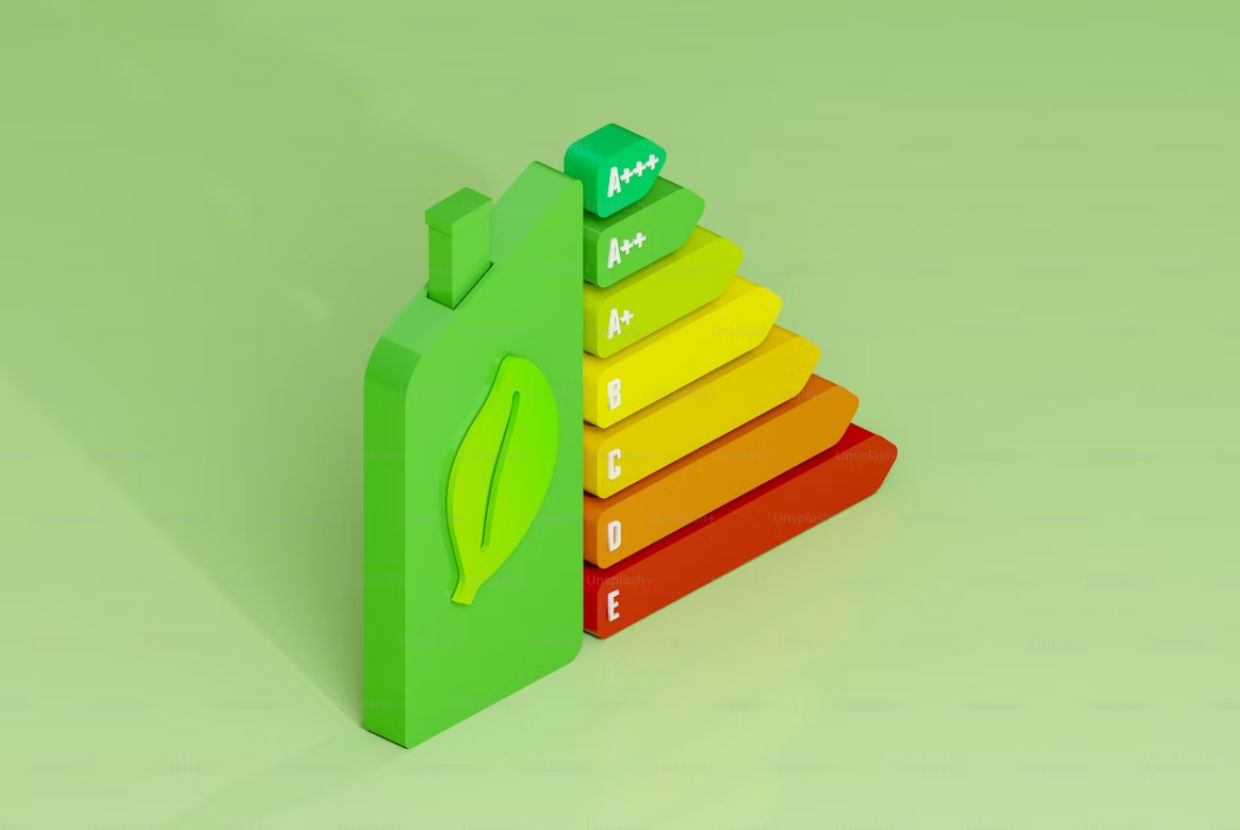
And yes, it matters more and more. Buyers and renters no longer just look at square footage or whether it has a terrace: they also pay attention to the energy efficiency rating. Because that letter—from A to G—not only summarizes energy consumption, but also says a lot about comfort, monthly expenses… and commitment to the planet. The quickest way to improve that rating in Mallorca is through the building envelope, and there the key decision is replacing windows during a renovation.
Why should I care?
Because it affects your wallet, your quality of life, and, incidentally, the emissions your home generates. An energy rating measures energy use for air conditioning, hot water, ventilation, and lighting. A home with a good rating consumes less and maintains the temperature better. It's not just about "spending less," it's about living better.
Since 2013, this certificate has been mandatory if you're going to sell or rent. And it's getting worse: starting in 2030, only homes with a minimum E rating can be legally marketed. In 2033, that threshold will rise to D. So, like it or not, this is an issue that affects many homeowners.
And how do you get that rating?
It's not done online or with a calculator. A certified technician must come to see the home. The process goes something like this:
- First, visits the property. The technician reviews its construction, the type of windows, how much sunlight enters it, what heating or cooling systems are used, whether there are solar panels, etc.
- AfterWith this information, use an official program (such as CE3X, HULC or CERMA) that simulates the energy consumption of the home under normal conditions.
- With thatA certificate is generated indicating the letter obtained, the level of consumption, CO₂ emissions, and some suggestions for improvement.
- FinallyThe document is registered with the corresponding agency in each autonomous community. Only then does it have legal validity.
And how much does it cost?
There's no flat rate. The price depends on several factors: the size of the home, its location, ease of access, and the technician's fees.
Generally speaking, an apartment of up to 120 square meters usually costs between 60 and 150 euros. If it's a large house or villa, it can go up to 200 euros.
Of course, it's a good idea to request several quotes and make sure the technician is certified. And there's an important detail: if you're part of a broader energy reform, you could be eligible for subsidies, especially within the framework of the European Next Generation funds. In some autonomous communities, these grants cover a large part of the cost.
What influences the grade?
Energy ratings don't depend on just one factor, but rather on a set of elements that, together, make a home more or less efficient. Some of the most relevant ones:
- IsolationWalls, roofs, floors... everything counts. If it's well insulated, less heat is lost in winter and less is gained in summer.
- The windows: Double or triple glazed windows with thermal break make a big difference.
- The orientation: A house that faces north is not the same as one that receives direct sunlight for a good part of the day.
- Air conditioning systemsThere is a huge gap between an older appliance and a modern heat pump or aerothermal system.
- The presence of renewable energies: Solar panels, both thermal and photovoltaic, help us to rely less on polluting sources.
- The lighting: It may seem minor, but switching to LED significantly reduces consumption throughout the year.
What are the advantages of getting a good grade?
It's not just a matter of pride (although that's a bit of a factor, too). Having a good energy rating brings real benefits:
- You save month after month on electricity and heating.
- Your home is worth more if you ever decide to sell or rent it.
- You can access aid and subsidies if you make reforms that improve efficiency.
- You gain in comfort: more stable temperatures, less humidity, less cold in winter.
- And yes, you're helping to reduce emissions. It may not seem like much, but it adds up.
Renovations in Mallorca: the ideal time to improve
If you are thinking of doing a complete renovation, it is the perfect time to improve the energy ratingMany decisions made during a construction project—such as the type of insulation, materials, window orientation, or choice of HVAC systems—have a direct impact on efficiency.
Any ideas?
- Add thermal insulation where there was none before.
- Replace windows with more efficient models.
- Upgrade heating, air conditioning, or hot water systems.
- Install solar panels.
- Redesign spaces to allow in more natural light.
In many cases, a massive renovation isn't even necessary. Sometimes, with a couple of well-thought-out interventions, you can raise the rating one or two levels. And if you do this as part of a renovation program, you can benefit from public aid.
How to know the rating of a home?
There's a public tool that allows you to check this information. It's called the Energy Efficiency Certificates Geoportal, run by the Ministry for Ecological Transition. You can search by address, municipality, or postal code and see the rating of a specific home.
It's especially useful if you're comparing apartments to buy or rent, because it adds another layer of information that, until recently, most people overlooked.
And what is the situation in Spain?
Well, there's plenty of room for improvement. According to IDAE data, more than 80% of homes in Spain have an E, F, or G rating. In other words, they're inefficient. And there's a clear explanation for this: many were built before strict standards existed in this area.
This poses a challenge, yes. But it also opens a door: there's a huge amount of room for improvement. Renovating homes isn't just a necessity due to climate issues; it can also increase the value of the housing stock, create jobs, and improve people's lives.
Tecnic Project: renovations in Mallorca with a sustainable approach
At Tecnic Project we have been doing this for years renovations in Mallorca, with special attention to energy efficiency. We know that improving a home's energy efficiency isn't a luxury; it's a smart decision. Because it doesn't just increase its value: it improves your daily life and reduces its environmental impact.
We're here to help you from the very beginning. We analyze your home, see what can be improved, find realistic solutions, and advise you throughout the entire process, including applying for grants if applicable.
If you're considering a renovation, don't put it off. It's a great time to take that step toward a more comfortable, more efficient, and future-proof home.