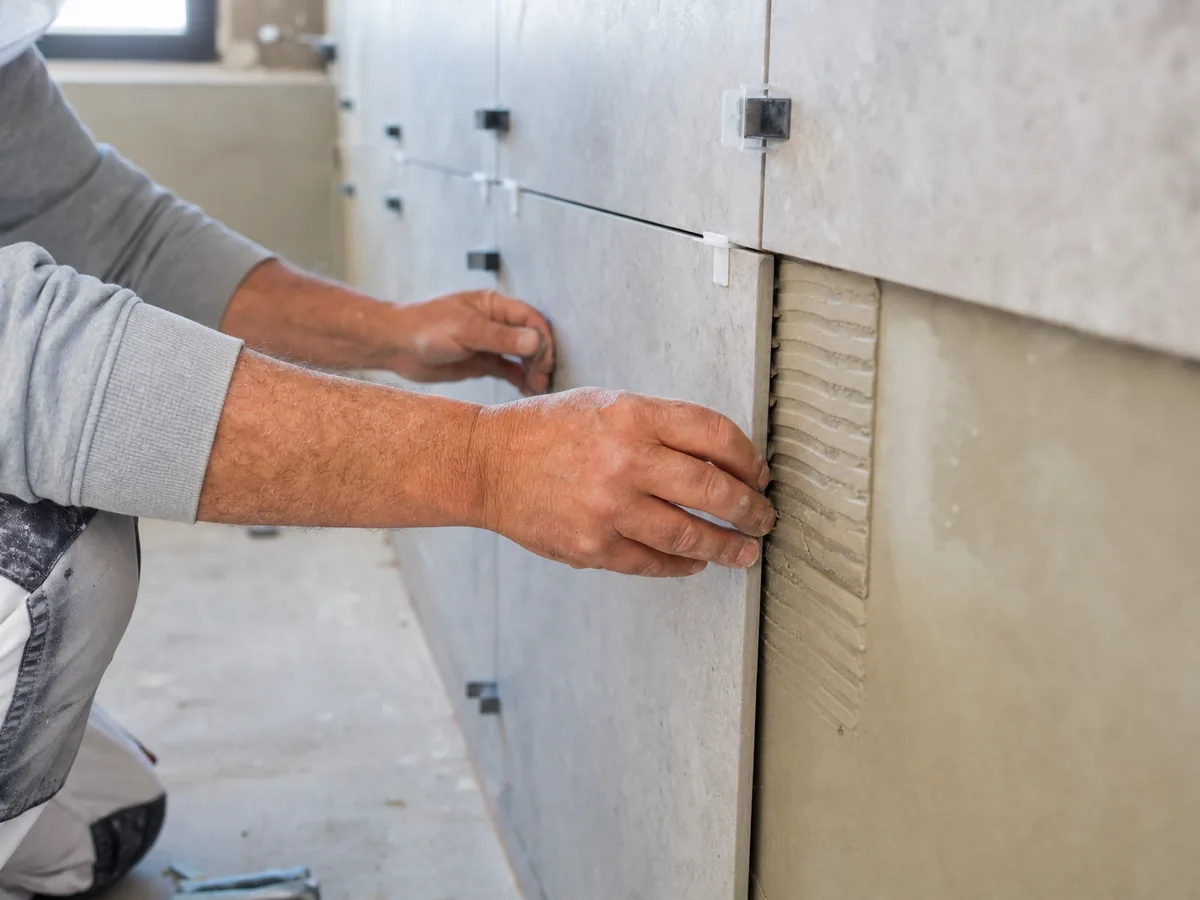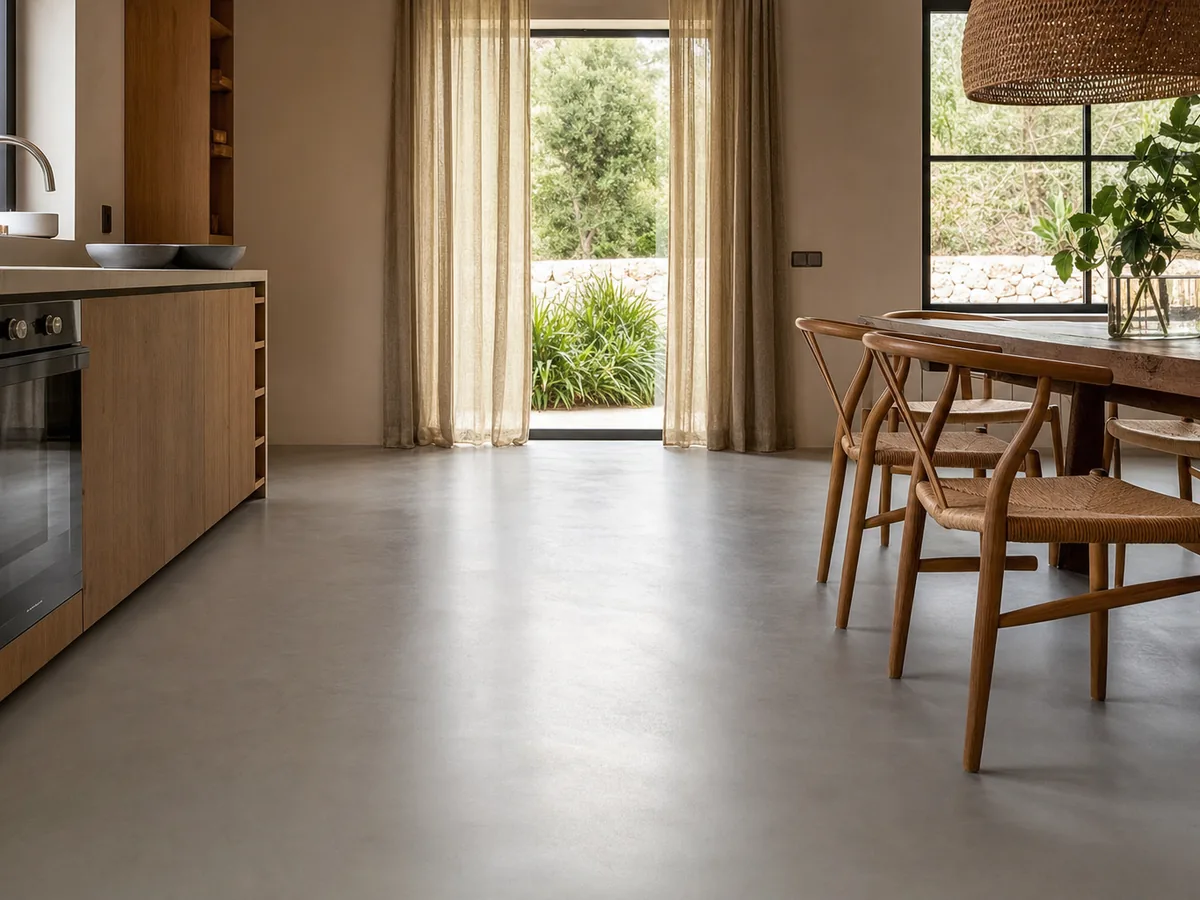
Microcement is a seamless, 3mm thick coating applied directly over existing floors or walls without construction or debris, making it ideal for quick renovations of floors, bathrooms, and kitchens. It costs between €50 and €85 per square meter in 2026, depending on the region, and lasts for over 20 years with resealing every 2-3 years in humid environments. Its main drawback is its susceptibility to dents and scratches, and repairs are noticeable. It's one of the major renovation trends of 2026.
A question that comes up frequently when someone wants to renovate their flooring without tearing up the house is: what about microcement? It's become quite popular, and rightly so, because it allows you to transform a home without any major construction debris. But like any material, it has its advantages and disadvantages. Let's take a closer look.
What is microcement and what is it made of?
Microcement is a decorative coating made of cement, resins, mineral pigments, and additives, applied in layers just 3 millimeters thick over existing surfaces. Its excellent adhesion allows it to cover floors and walls without demolishing what's underneath and without altering the structure of the space.
The beauty of microcement lies in its incredibly thin, continuous layer. It has no joints, so there are no lines where dirt or mold can accumulate, creating a uniform, modern surface that gives a feeling of spaciousness. It's one of the most sought-after finishes in the interior design in Mallorca currently.
Where can microcement be applied in a renovation?
Microcement can be applied to floors, walls, bathrooms, kitchens, stairs, and even countertops and furniture, because it adheres to ceramic, tiles, cement, or wood without the need for removal. This versatility is what makes it so useful in renovations where demolition is undesirable.
The most common uses in a home renovation:
- Continuous flooring in living room, hallway and bedrooms.
- Walls and shower trays in bathrooms, thanks to their waterproofing with sealing.
- Fronts, floors and countertops in modern kitchens.
- Stairs and passageways where joints would be a problem.
In bathrooms and kitchens, a specific microcement and good sealing are recommended, because these are the areas with the highest humidity and must meet the health requirements regarding moisture in the Technical Building Code. If you have any doubts about the materials for those rooms, we can help you what flooring to choose for bathrooms and in the best materials to renovate your kitchen.
How much does microcement cost per square meter in 2026?
Microcement will cost between €35 and €100 per square meter in 2026, although the most common price is between €50 and €60/m² installed. In bathrooms and kitchens, where floors and walls are coated with reinforced sealant, the price rises to €60-85/m², according to data from Cronoshare.
| Application | Estimated price 2026 |
|---|---|
| Microcement flooring (living room, hallway) | €50 – €60/m² |
| Complete bathroom (floor and walls) | €60 – €85/m² |
| Kitchen (floor, fronts) | €60 – €85/m² |
| Microcement countertop | €180 – €350/linear meter |
The price depends primarily on labor: microcement is a material that requires an experienced applicator, because the finish is applied by hand, layer by layer. It's not advisable to cut corners here, because a poor application will be permanently noticeable.
What are the advantages of microcement in a renovation?
The main advantage of microcement is that it renovates floors and walls without construction work: it's applied directly over the existing surface, without debris, and is only 3 mm thick, which eliminates unevenness in doorways and hallways. This transforms a multi-day renovation into a much cleaner and faster process.
Its most valued advantages:
- Seamless, so it doesn't accumulate dirt or mold and can be cleaned with water and neutral soap.
- It is applied without lifting the previous pavement, ideal when it is not possible or desired to chip away.
- Continuous surface that provides spaciousness and a very modern look.
- Waterproof with proper sealing, suitable for humid areas.
- Durability exceeding 20 years with basic maintenance.
It is, along with the microterrace, one of the continuous finishes that are most influencing the renovations of 2026.
What are the disadvantages of microcement?
Microcement is delicate and susceptible to damage from bumps and impacts: a heavy or sharp object can easily scratch it, and repairs are often noticeable because it's difficult to match the original color and texture. This is its main drawback, and it's worth knowing this before choosing it.
Other disadvantages to consider:
- It may lose color or absorb stains from harsh products over time.
- It requires periodic resealing, usually every 2-3 years in areas of high humidity.
- Its repair is expensive and it rarely becomes invisible.
- It depends a lot on the applicator's skill: a bad job is not easily fixed.
It's not a bad material, it's a demanding one. When applied and maintained correctly, it yields excellent results; when applied incorrectly, it causes problems. That's why who installs it matters.
Microcement or porcelain: which to choose for the floor?
For flooring, microcement offers superior continuity, faster installation, and no grout lines, while porcelain tiles are more resistant to impacts and easier to repair. The choice depends on the amount of use and wear and tear the area will endure.
| Factor | Microcement | Porcelain |
|---|---|---|
| Facility | Without construction, on what already exists | Requires placement and joints |
| Boards | None, continuous surface | Yes, they accumulate dirt |
| Impact resistance | Media, can be marked | High |
| Repair | Expensive and it shows | Simple, the part is replaced. |
| Maintenance | Resealed every 2-3 years | Minimum |
For high-traffic areas or areas with children and pets, porcelain tiles are usually more practical. For a modern, seamless finish without construction work, microcement is hard to beat. We compare it with more materials in What is the best flooring for kitchens?.
When is it NOT advisable to use microcement?
Microcement is not recommended for areas that frequently receive heavy impacts, such as garages or home workshops, where it would quickly become damaged. It's also not advisable if you're unwilling to commit to the periodic resealing required in bathrooms and kitchens to maintain its waterproofing.
And it's worth considering if you're looking for a floor you can "forget about": microcement is beautiful but requires maintenance, and a poorly executed repair can ruin the entire room. In those cases, a good quality porcelain tile imitation offers a similar result with less upkeep. We'll advise you based on how you'll actually use it.
Frequently asked questions about microcement in renovations
Is it possible to apply microcement over tiles without removing them?
Yes, microcement can be applied directly over tiles, ceramics, cement, or wood without needing to remove them, thanks to its excellent adhesion and minimal thickness of 3 mm. This is why it's so common in renovations that don't require construction work: it allows you to update an old bathroom or kitchen by covering the existing tiles, without debris or uneven surfaces.
How long does microcement last in a bathroom or kitchen?
Microcement lasts over 20 years in a bathroom or kitchen if applied correctly and resealed every 2-3 years in high-humidity areas. The key to its durability is the sealing: well-maintained, it retains its impermeability and color, while without resealing, it can absorb stains and lose its protective properties over time.
How much does it cost to install microcement in a complete bathroom?
Applying microcement to a complete bathroom, including floor and walls, costs between €60 and €85 per square meter in 2026. For a standard bathroom, the investment usually reaches several hundred euros in materials and labor, plus the cost of the shower tray if it is also tiled. The price depends primarily on the surface area and the applicator.
Is microcement water-resistant in the shower?
Microcement is water-resistant in the shower as long as it's applied with sealants specifically designed for wet areas and regularly resealed. When properly applied, it's waterproof and allows for seamless shower trays. If the sealant fails or isn't renewed, it can begin to absorb moisture, hence the importance of correct application.
Want to use microcement in your renovation? We offer free consultations.
Microcement gives spectacular results when applied by someone who knows what they're doing. We are a renovation and finishing company in Mallorca we're a family-run business with a fixed labor price, a guarantee, and 100% financing. Our microcement work is done by experienced applicators. We'll tell you honestly whether it's right for you or if another material would be more suitable. Book your appointment here or write to us from contact, and learn about our service kitchen renovations in Mallorca.
This content is for guidance only and does not replace an applicator's assessment of the specific surface of your home.