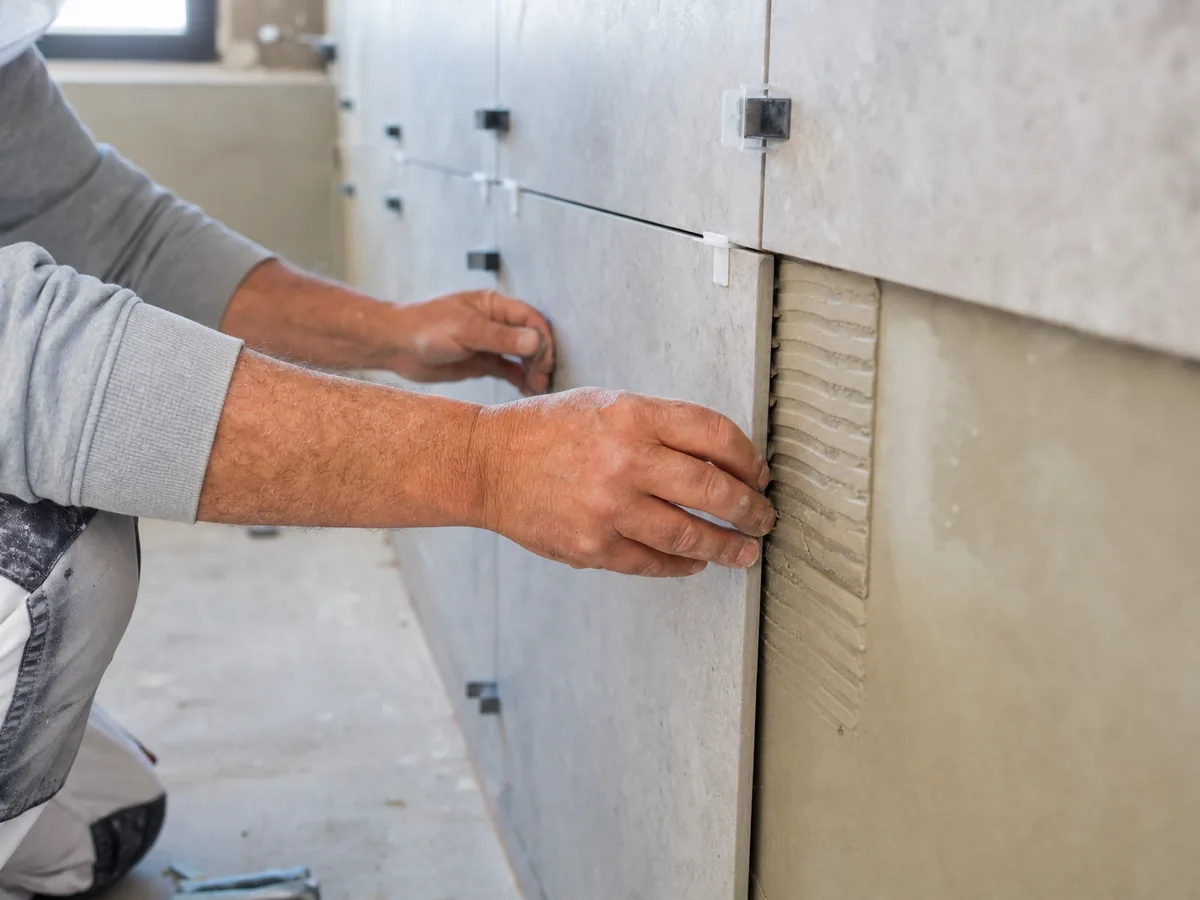
A renovation contract has to fix eight things in writing: detailed scope item by item, exact material qualities and references, the price and what can change it, payment tied to stages of the works, start and finish dates, a penalty for unjustified delay, a procedure for unforeseen problems, and guarantees with their term. What is not written down is not agreed, and the cost overruns on a renovation almost never come from bad faith: they come from an ambiguous quote.
Why do renovations get more expensive if there was a signed quote?
Because a quote is not a contract. A quote says what the planned work costs; a contract says what happens when something unplanned turns up. Most of the cost overruns that end in an argument do not come from badly calculated items: they come from items that were never defined.
The most common example: "Complete bathroom renovation, €4,500." It sounds straightforward. But does that include removing the old tiles? Does it include waterproofing? Are the fixtures mid-range or does the client choose them separately? What if, upon opening up, they discover a fibre cement soil stack that needs replacing? Each of these unanswered questions represents a potential additional cost, and whoever asks them when signing the contract avoids an awkward conversation halfway through the project.
We say this as a company that works with fixed labour rates, so we have a clear interest in having a clearly defined scope of work: if it isn't, the one who has committed to a price loses out. A detailed contract protects both parties, not just the owner.
What clauses must a renovation contract include?
These are the eight that we consider essential, in the order in which they should appear:
- Full identification of the parties, with the company's tax identification number and the address of the work.
- Scope by items, with measurements and units, not a global concept.
- Material qualities and references, with brand and model or range and unit price of reference.
- Total price, breakdown and applicable VAT, indicating what is expressly excluded.
- Payment schedule linked to completed milestones, not calendar dates.
- Start and end dates, with intermediate milestones if the work is long.
- Penalty for unjustified delay, with daily amount and reasons for exclusion.
- Guarantees, indicating the deadline for the work and the deadline for materials.
Points 3 and 4 are the ones that do the silent work. "Quality faucets" means nothing; "single-lever faucets, price range €120-180 per unit, reference to be chosen from these three" does. And the list of exclusions is just as important as the list of inclusions: if the kitchen furniture isn't included, the contract has to state that, not reveal it at the end.
How should the cost of a renovation be divided?
Payment should be based on completed work, not a schedule. A sensible payment plan involves a moderate advance at the start, intermediate payments upon completion of verifiable milestones, and a final payment upon delivery, after a thorough inspection.
| Moment | Reasonable percentage | What needs to be done |
|---|---|---|
| To the signature | 20 – 30 % | Initial stockpiling and start of construction |
| Intermediate milestone 1 | 25 – 30 % | Demolitions and underground installations completed |
| Intermediate milestone 2 | 25 – 30 % | Tiling, flooring and carpentry installed |
| Upon delivery | 10 – 15 % | Auctions closed and final review accepted |
Two red flags regarding the money. First, an advance exceeding 40% of the total cost: no construction project needs that much capital before starting. Second, payments tied to calendar dates instead of completed work, because this disconnects payment from actual progress and eliminates the incentive to meet deadlines. That final 10-15% of the total cost, withheld until the final inspection, is what guarantees that the finishing touches are completed; without it, the last week of construction drags on endlessly.
How does the penalty for delay in a renovation work?
The penalty clause sets a deadline for completion and a financial penalty for each day of unjustified delay. For it to be valid and enforceable, it must be proportionate to the actual damage: an excessive penalty can be reduced by the courts, so setting it exorbitantly high does not provide any additional protection.
In home renovations, a typical and defensible penalty is between 0.5‰ and 1‰ of the total price per calendar day of delay, with a cumulative maximum of 5-10% of the contract price. It is also necessary to specify the reasons that exclude this penalty: force majeure, modifications requested by the owner, delays in the delivery of materials not controlled by the company, or administrative delays in obtaining permits.
This last point is especially relevant in Mallorca. If the project depends on a major works permit, the municipal deadline is beyond anyone's control, and penalizing the company for it makes no sense. That's why we always separate the construction timeline from the processing timeline: we commit to the former, and inform you about the latter. We explain this in detail in How long does a complete renovation take in Mallorca?.
What should the contract say about unforeseen events?
It must specify three things: what is considered an unforeseen event, how it will be communicated, and what price it will be valued at. A contract that simply states "unforeseen events will be valued separately" leaves the door open to any amount.
The mechanism is simple. When something unforeseen arises, the company communicates it in writing with a photograph, technical proposal, and price before carrying out the work, and the owner also authorizes it in writing. Nothing is done without prior authorization, and nothing is invoiced without authorization. Furthermore, it's advisable to include unit prices in the contract for the most likely unforeseen events, which are quite predictable in an older home.
- Replacement of a section of soil stack or pipe in poor condition.
- Reinforcement or replacement of damaged joists.
- Chipping and re-plastering of walls with hollow render.
- Treatment of humidity by discovering active capillary action.
- Removal of asbestos-containing material, which requires a company registered in the corresponding registry and an approved work plan in accordance with the Royal Decree 396/2006.
With those prices agreed upon in advance, an unforeseen event ceases to be a negotiation in the middle of the dust and becomes a sum.
What guarantees does a renovation have by law?
The building guarantees are established by Law 38/1999 on Building Regulations, The warranty period is ten years for structural damage, three years for building elements or installations that affect habitability, and one year for finishing defects. In renovation projects, the warranty period depends on the scope of the work, so the contract should expressly specify the commercial warranty offered by the company.
We offer a one-year warranty on the renovation and a two-year warranty on materials, and we put it in writing. We find a concrete and verifiable commitment more useful than a generic reference to the law, because when something goes wrong, the homeowner doesn't want to argue about legal deadlines: they want us to come and fix it.
When NOT to sign a renovation contract
Four situations in which it is advisable not to sign, even if the price is good:
- There are no measurements or unit prices, It's just a total. It's impossible to compare and it could easily increase.
- They ask for more than 40% up front or full payment in advance.
- No end date or with the date "subject to availability".
- No invoice or VAT. Besides the tax problem, without an invoice there is no enforceable guarantee or proof of the contract, nor protection under the law that provides to individuals. consolidated text of the General Law for the Defense of Consumers and Users against abusive clauses.
The last option is the most expensive. A renovation without an invoice is a renovation without a warranty, without applicable liability insurance, and with no recourse if something goes wrong two years later. The discount never makes up for it. For information on how to choose wisely, see our guide. How to choose the best renovation company.
Frequently asked questions about a renovation contract
Is it mandatory to sign a contract for a home renovation?
There is no general legal requirement for a written contract for renovations, but without one, proving the agreement is nearly impossible and any claim becomes much more complicated. For projects requiring design and technical supervision, additional mandatory documents are required. In any renovation exceeding a few thousand euros, a written contract with itemized scope is what separates a solvable problem from a dead-end dispute.
What penalty for delay can I include in my renovation contract?
A proportionate amount, usually between 0.5‰ and 1‰ of the total price per calendar day of unjustified delay, with a cumulative cap of around 5-10% of the contract price. The penalty cannot be disproportionate to the actual damages, as this may be subject to judicial review. Excluded causes must also be listed: force majeure, changes requested by the owner, and administrative delays.
Can I withhold part of the payment until the auctions are settled?
Yes, and it's highly recommended to agree on a final retention of 10-15% of the price paid after the final inspection, accepted in writing. This is the most effective way to ensure the last phase of the project—the finishing touches—is completed on time. It should be included in the contract's payment schedule, not agreed upon at the end.
Who pays if an unexpected expense arises during a renovation with a fixed price?
It depends on how the contract is worded. If the fixed price only covers the defined scope of work, unforeseen expenses are valued separately and paid for by the owner, provided they are notified with a proposal and price and authorize it before work begins. In our case, the fixed price covers the labour for the contracted scope of work, and unforeseen structural or installation issues are valued at unit prices agreed upon in advance.
Request a quote that you can compare.
If you're getting quotes for a renovation, ask everyone to include measurements, unit prices, and a list of exclusions. It's the only way to truly compare, and ours comes with all of that. We are renovation professionals in Mallorca With three generations in the business: fixed labour rates, payment schedule tied to milestones, one-year warranty on renovations and two on materials, and 100% financing. If you're looking at a complete project, ask a quote for a full renovation in Mallorca and compare it with the rest.