Removing textured paint (gotelé) involves sanding the wall or applying leveling compound until it's smooth, then priming and painting. In 2026, in Mallorca, the cost to remove the textured paint alone ranged from €8 to €15/m² of wall, or €18-€25/m² including smoothing and painting. The method depends on whether the textured paint is water-based (easy, with water) or plastic-based (harder, requires sanding or plastering). In older apartments in Palma, check beforehand if the paint contains lead.
Removing textured paint (gotelé) is one of the first decisions when renovating an apartment in Mallorca: you can sand it, cover it with filler until the wall is smooth, or, in extreme cases, cover it with plasterboard. The right option depends on the type of textured paint, the condition of the wall, and your budget. In this guide, we'll tell you, with the experience of three generations of renovation professionals, how it's really done, how long it takes, what it costs per square meter in 2026, and a piece of advice that almost no one mentions: in older homes in Palma, it's advisable to check if the original paint contains lead before you start sanding. If you're considering a apartment renovation in Mallorca, smoothing the walls is often the first step that changes everything.
How to remove textured paint: the four methods that work
There are four ways to get rid of textured paint, and choosing the right one saves you days of work and dust. The first step is to identify the type: wet an area with water; if it softens and falls off, it's textured paint. to the temper; If the water slips, it's plastic (much more resistant). From there:
- Sanding (distressed textured paint). Dampen the wall with a spray bottle, let it sit for a few minutes, scrape with a wide spatula, and sand to even it out. This is the cheapest method when the paint droplet is fine.
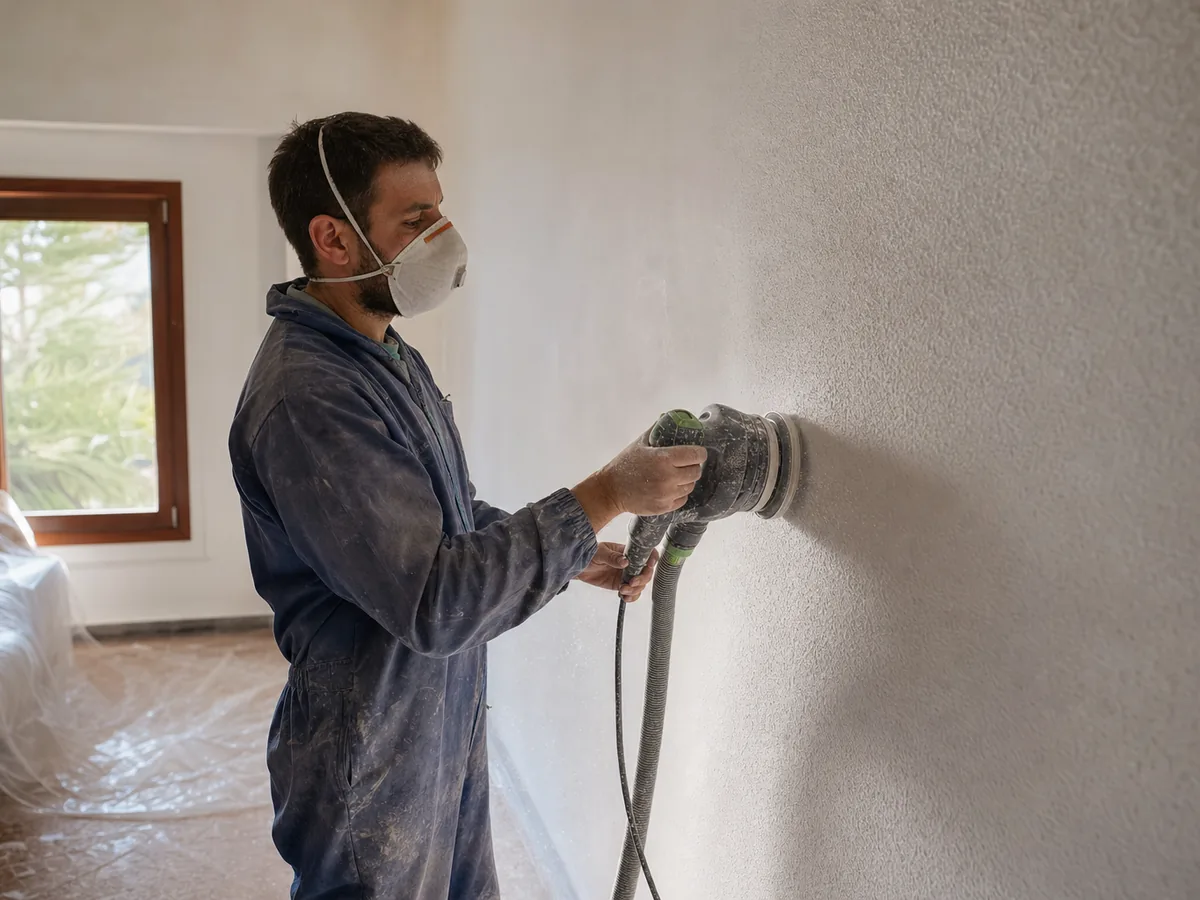
- Orbital sander (plastic textured paint). Plastic doesn't come off with water, so it's tackled with an electric sander. Those with integrated dust extraction reduce dust, although it's still the messiest method.
- Plaster with paste and trowel. Instead of removing it, cover the textured paint with one or two coats of smoothing compound and sand it finely once dry. This gives the smoothest finish, ideal if you're looking for a gallery wall.
- Spot lamination. If the textured paint is very thin, simply sand the rough edges and fill the gaps with plaster before applying the primer.
And a fifth option for hopeless cases: lining the wall with plasterboard or laminated panel, which we see below because it is not always worth it.
| Method | Indicative cost (€/m²) | Finish | Dust/dirt | When to choose it |
|---|---|---|---|---|
| Wet sanding (tempered) | 5-10 | Well | Average | Textured paint, fine drop |
| Orbital sander (plastic) | 8-15 | Very good | High | Plastic textured paint, sound wall |
| Plastered with paste and trowel | 9-18 | Perfectly smooth | Low | You're looking for a fine, gallery-quality finish. |
| Spot plastering + sanding | 8-14 | Well | Average | Low-lying textured paint, loose imperfections |
| Line with plasterboard/laminate | 25-40 | Perfect | Low | Wall badly damaged or with lead |
How much does it cost to remove textured paint per square meter in 2026?
In 2026, removing textured paint costs between 8 and 15 €/m² of wall only the dripping, and it rises to 18-25 €/m² This includes complete smoothing, priming, and final painting. The official reference price of Smoothing and leveling of textured walls using the CYPE price generator it moves within that fork.
One detail that confuses many people: it is charged per square meter. wall, Not the floor. A 70 m² apartment easily has 180-200 m² of wall space, so for a whole home we're talking about €2,000-€2,500 just to smooth the walls, according to the 2026 reference budgets for smoothing walls. What makes the work more expensive:
- Type of textured paint: Plastic costs more than tempera.
- Drop thickness: The thicker it is, the more paste and the more sanding.
- Wall status: Cracks or existing dampness must be repaired separately.
- Furnished home: Protecting and moving furniture adds manpower.
At Tecnic Project we work with fixed labor price and no surprises, precisely because textured walls are one of those jobs where the budget skyrockets. If you're going to take the opportunity to repaint, choosing the right color is just as important as the wall itself: we can help you with that What color to paint a house to make it look bigger.
Can you remove the textured paint even with a furnished house?
Yes, it's possible, but it's inconvenient and somewhat more expensive. Removing textured paint generates a lot of fine dust that gets everywhere, so you need to take extra precautions before starting. With the house empty, the work is faster and cleaner; with furniture, gather it in the center of each room and cover it. Our practical recommendation for renovations in occupied homes:
- Cover furniture and floors with plastic and tape, not with sheets (dust passes through them).
- Seal doors and tape electrical outlets; use a sander with aspiration whenever you can.
- Ventilate every day and work room by room, not the whole house at once.
- Book a "clean" room to sleep in if you live in the apartment.
How long does it take to smooth the walls of an apartment?
Smoothing the walls of an entire house takes between one and two weeks with a professional team. An insulated room can be finished in 2-4 days, including removing the textured paint, drying the filler, sanding, priming, and painting; a 90 m² apartment is usually ready in 7-10 working days. The bottleneck isn't sanding, but the drying times of each coat of plaster: you can't speed it up without compromising the finish. Plan it, especially if it's your main residence.
Beware of old paint: lead in old houses in Palma
Here's a tip you'll rarely read in a guide to textured walls. Old apartments in the center of Palma and towns of Mallorca, The original paint under the textured finish may contain lead, It was widely used in house paints until the late 1980s. Sanding or scraping releases a toxic dust that is dangerous, especially for children and pregnant women.
The The Pediatric Environmental Health Unit (PEHSU) warns that some families have been poisoned by sanding or scraping lead paint., because "large amounts of dust are produced that can remain in old buildings long after renovations are finished." If your house predates 1980, don't sand lightly: assess plaster over (without generating dust) or hire a professional with dust extraction and protective equipment. This is yet another reason not to improvise in a Renovate an old apartment in Palma.
And the rubble doesn't go in the street bin: in the Balearic Islands, construction waste is governed by the Royal Decree 105/2008 on construction and demolition waste they must be taken to an authorized waste management company or recycling center in small quantities, keeping the receipt. We handle the collection as part of our service.
Frequently asked questions about removing textured paint
Is it better to remove the textured paint or cover it with smoothing paste?
It depends on the thickness of the texture and how much time you have. Covering the textured paint with leveling compound is faster, less messy, and gives a very smooth finish, but it reduces the available space by a few millimeters and isn't suitable for very thick textures. Sanding or scraping the textured paint offers a more durable result and a finer base, although it generates much more dust and is more work. For thin textures, cover it; for thick textures or very uneven walls, it's best to remove it.
How much does it cost to unclog a small room?
A room with approximately 12 m² of floor space (around 35-40 m² of wall space) costs €300-€500 just for removing and smoothing the textured paint, and slightly more if you add primer and paint. The price per square meter of wall in 2026 is around €8-€15/m² for removing the textured paint, and rises to €18-€25/m² for a painted finish. The price varies depending on whether the textured paint is distemper or plastic-based and the previous condition of the wall.
How can I tell if my textured paint is tempera or plastic?
Dampen an inconspicuous area of the wall with water and wait a couple of minutes. If the textured paint softens, darkens, and peels off when you run a spatula over it, it's... to the temper (the easiest and cheapest to remove). If the water slides off and the drop remains hard and intact, it is plastic, It is more resistant and requires either an orbital sander or direct plastering with filler. This 5-minute test determines the method and price of the entire job.
Does textured paint leave a lot of dust in the house when removed?
Yes, sanding textured walls is one of the dustiest jobs in a renovation, especially with plastic-coated textured walls. This can be greatly minimized by using sanders with integrated dust extraction, protecting furniture and floors with plastic sheeting, sealing doors, and ventilating daily. The cleanest alternative is to apply a coat of plaster over the top, which generates very little dust. In older homes, this dust may contain lead, so take extra precautions.
When it's NOT worth smoothing and it is worth lining with plasterboard
Smoothing isn't always the best move. If the wall is very damaged, with dampness, large cracks or deep chips, Plastering is like throwing paint on a pot: it will be uneven and will crack again. In these cases, it's better to line the surface with plasterboard or laminated panels screwed to studs, which leaves a perfect surface and allows for insulation or running utilities behind it. It's also the recommended option when there is lead paint You don't want to sand because you encapsulate the wall without generating dust. The downside is that it reduces the room's dimensions by a few centimeters and increases the cost. If you're also going to renovate the flooring, make that decision in conjunction with guides like Porcelain, wood flooring or microcement: which flooring to choose.
Leave your walls smooth with no surprises
At Tecnic Project, we've been creating smooth walls in Mallorca for over three generations, and we know that removing textured paint properly makes all the difference between a beautiful renovation and a botched job that cracks. We offer you fixed labor price, 100% financing, and a 101% discount on materials, with no hidden costs. Tell us the square footage and condition of your walls via WhatsApp, phone, or our form, and we'll prepare a fixed-price quote for your project renovations in Palma de Mallorca. No surprises, the house is ready to be painted.