Choosing the right cooktop isn't just a technical question: it has a lot to do with your daily routine in the kitchen, the pace of your home, and how you like to cook. When renovating or building a new kitchen, the decision may seem simple at first, but doubts quickly arise. Today, the market offers three main options: gas, ceramic, or induction.
And while they all do their job, the experience varies greatly from one to the other. So, if you're comparing gas vs. ceramic vs. induction, it's worth taking a moment to understand what each one offers.
How does each type work?
Gas hobs
The traditional ones. They run on natural gas or butane and generate heat with a direct flame. They have something that those who enjoy cooking "by eye" love: the ability to adjust the heat on the fly. That immediate response and visual control mean many cooks don't want anything else.
Ceramic hobs
Here, the heat is produced by electrical resistors placed under a glass pane. The heat passes to the glass and then to the container. It's not the fastest system, but it's generally more affordable than induction. The drawback? Thermal inertia: it takes time to heat up... and also to cool down.
Induction cooktops
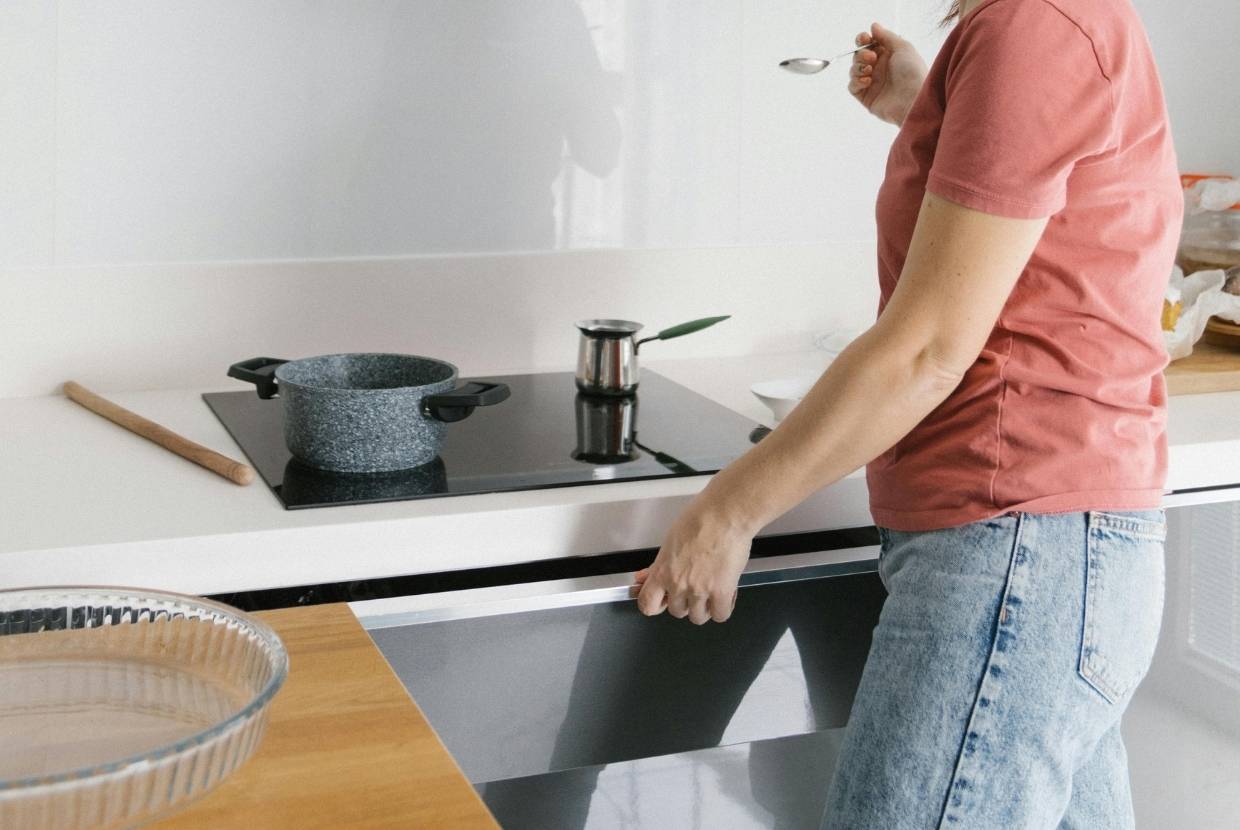
The latest technology, and also the most precise. They generate an electromagnetic field that directly heats the container. This means the glass barely heats up, which is a huge plus in terms of safety and cleanliness. And when it comes to efficiency, they're in a league of their own.
Which one consumes more energy?
Here we enter a key point when comparing gas vs. ceramic vs. induction: energy consumption.
- GasAlthough gas is generally cheaper than electricity, a lot of heat is lost in the process. So, in terms of pure efficiency, it's not the best.
- Ceramic hob: It's an improvement over gas, but electric heating elements aren't particularly efficient. Furthermore, since they retain heat longer, they can waste more than they should if not turned off in time.
- Induction: It wins by a landslide. It only heats the container, without wasting energy, and this is noticeable both in consumption and in the cooking time.
Which is faster?
Speed matters, especially when time is short.
- Gas: It heats up quickly, yes, but the heat distribution is not always even.
- Ceramic hob: It takes time to start up and also to cool down. It's not the most agile.
- Induction: There's no doubt about it. You boil water and it's ready in a matter of minutes. Ideal for those who cook every day and want efficiency.
Kitchen Safety
If you have little ones at home, or you simply cook a lot, this point cannot be overlooked.
- Gas: There is a risk of leaks, open flames, gas build-up, etc. Good ventilation and constant attention are required.
- Ceramic hob: No flame, but the glass remains very hot and can cause burns if not careful.
- Induction: Since it doesn't heat the surface, but rather the container, accidents are less likely. And if it doesn't detect a suitable pot, it simply won't work.
Cleaning and maintenance
There are important differences here too.
- Gas: You have to disassemble the grates and burners to clean everything properly. It's not the most convenient thing.
- Ceramic hob: smooth surface, yes, but residue can remain embedded and a specific product is required.
- InductionSince glass doesn't get as hot, liquids don't burn. Just a damp cloth and you're done. It's the most practical of the bunch.
How much does it cost?
When renovating, budget is always a factor to consider.
- Gas: This is usually the cheapest option to purchase. But be careful, installation may require construction work and periodic inspections.
- Ceramic hob: Mid-range in price, with a reasonable lifespan. A balanced option.
- Induction: higher initial investment, yes, but it is compensated over time by energy savings and durability.
And the household goods?
This point is sometimes forgotten, but it is key when choosing between gas vs. ceramic vs. induction.
- Gas: any pot or pan will do.
- Ceramic hob: also supports all materials.
- Induction: Here, you should keep in mind that only containers with a ferromagnetic base will work. If you're not sure, try a magnet: if it sticks, it'll work.
What about the environment?
And with the air you breathe while cooking.
- Gas: produces combustion, which implies emissions inside the home, such as nitrogen dioxide. Proper ventilation is essential.
- Ceramic and induction hobs: no flame, no gases. They improve indoor air quality and are more sustainable in the process.
Which one suits you best?
- If you love traditional cooking and want to see the flame, gas may be your best friend.
- If you're looking for a compromise between cost and functionality, and don't mind waiting a little longer, a glass-ceramic cooktop is a solid choice.
- If you prioritize speed, safety, and efficiency, whether you cook daily or have children around, induction makes all the difference.
Before you decide, think about this:
Not everything depends on taste. There are practical aspects worth reviewing:
- What electrical power do you have contracted?
- Is there good ventilation in your kitchen?
- Is your cookware compatible with induction?
- How much do you use the kitchen and what kind of dishes do you usually prepare?
- Do you have a fixed budget or are you open to long-term investing?
At Tecnic Project we help you decide
At Tecnic Project, we've been helping people like you with their kitchen renovations in Mallorca for years. If you're wondering whether to use gas, ceramic, or induction, we'll talk to you, study your space and your cooking style, and suggest a solution that's truly right for you.
We take care of everything: from design to installation, taking care of every detail so that your kitchen is not only beautiful, but also comfortable, safe, and practical. Because a well-designed kitchen improves your daily life, and it shows.
If you're ready to transform your kitchen, we're here to help.