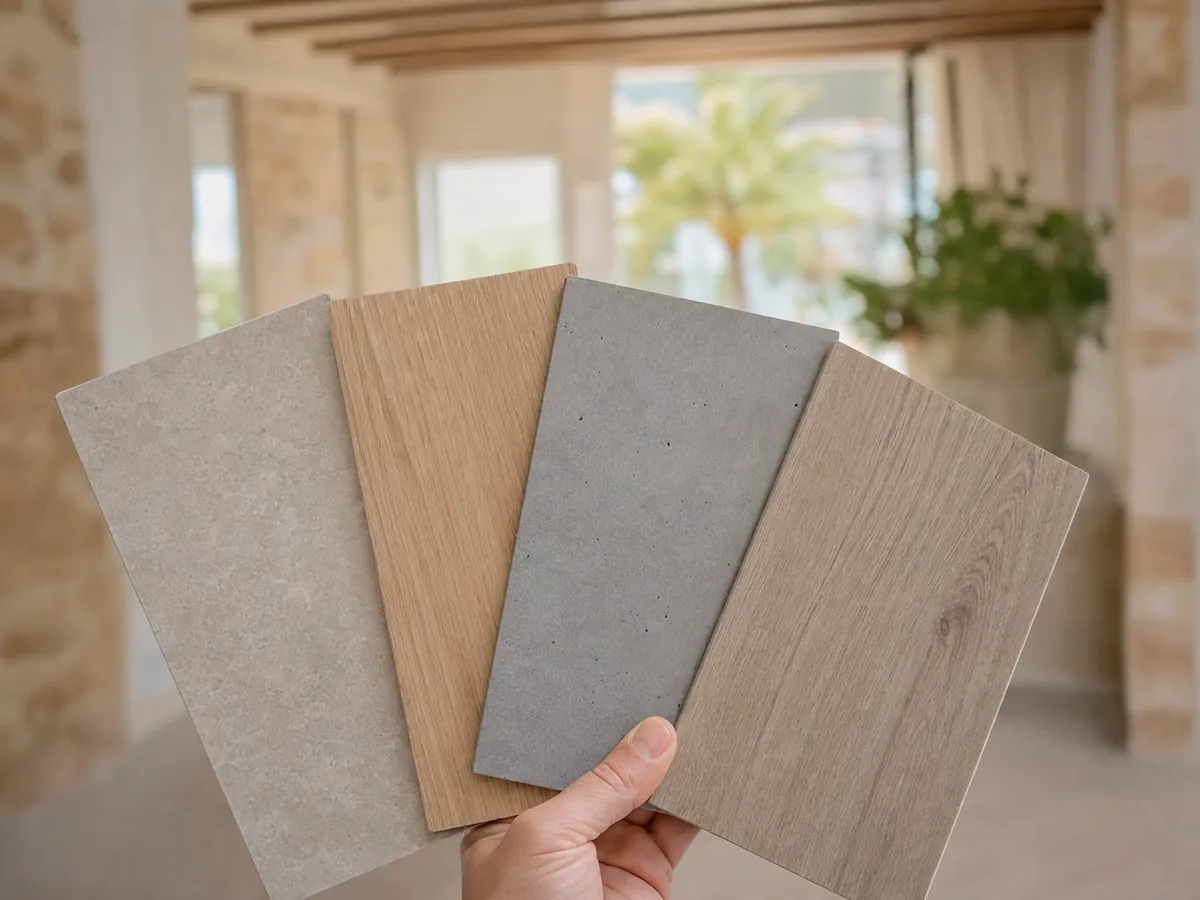
It depends on the use and budget: for a complete renovation in Mallorca, porcelain tiles (€30-70/m² installed in 2026) are the most versatile and moisture-resistant option; laminate flooring (€20-45/m²) provides affordable warmth in bedrooms; microcement (€40-90/m²) unifies the house without seams; and vinyl/SPC flooring is the best choice when you want a quick renovation without removing the old floor. In damp areas and with underfloor heating, opt for porcelain or microcement.
Know which flooring to choose for a renovation choosing the right flooring is one of the first decisions—and one that most significantly impacts both the budget and the final result—when renovating your entire home. The short answer: there's no single "best" flooring option, but rather the one that best suits the use of each room, your budget, and the island's humid climate. In Mallorca, where many homes are close to the sea and exposed to humidity and salt air, the flooring material is just as important as its appearance. In this guide, we compare the five most common flooring options for renovations—porcelain, laminate, hardwood parquet, microcement, and vinyl/SPC—based on price, durability, water resistance, compatibility with underfloor heating, and installation requirements renovation experts in Mallorca, we see it every week: choosing the right flooring avoids problems years later.
What flooring to choose for a complete renovation in Mallorca
For an entire home, the best combination is usually porcelain tile in wet areas and high-traffic zones (kitchen, bathrooms, entryway, living room) and warmer flooring—laminate or vinyl—in the bedrooms. If you're looking for a seamless, contemporary finish, microcement unifies the entire house. The key to deciding which flooring to choose for a renovation It's about reasoning room by room, not imposing a single material based on taste.
These are the five options we most often use when renovating on the island:
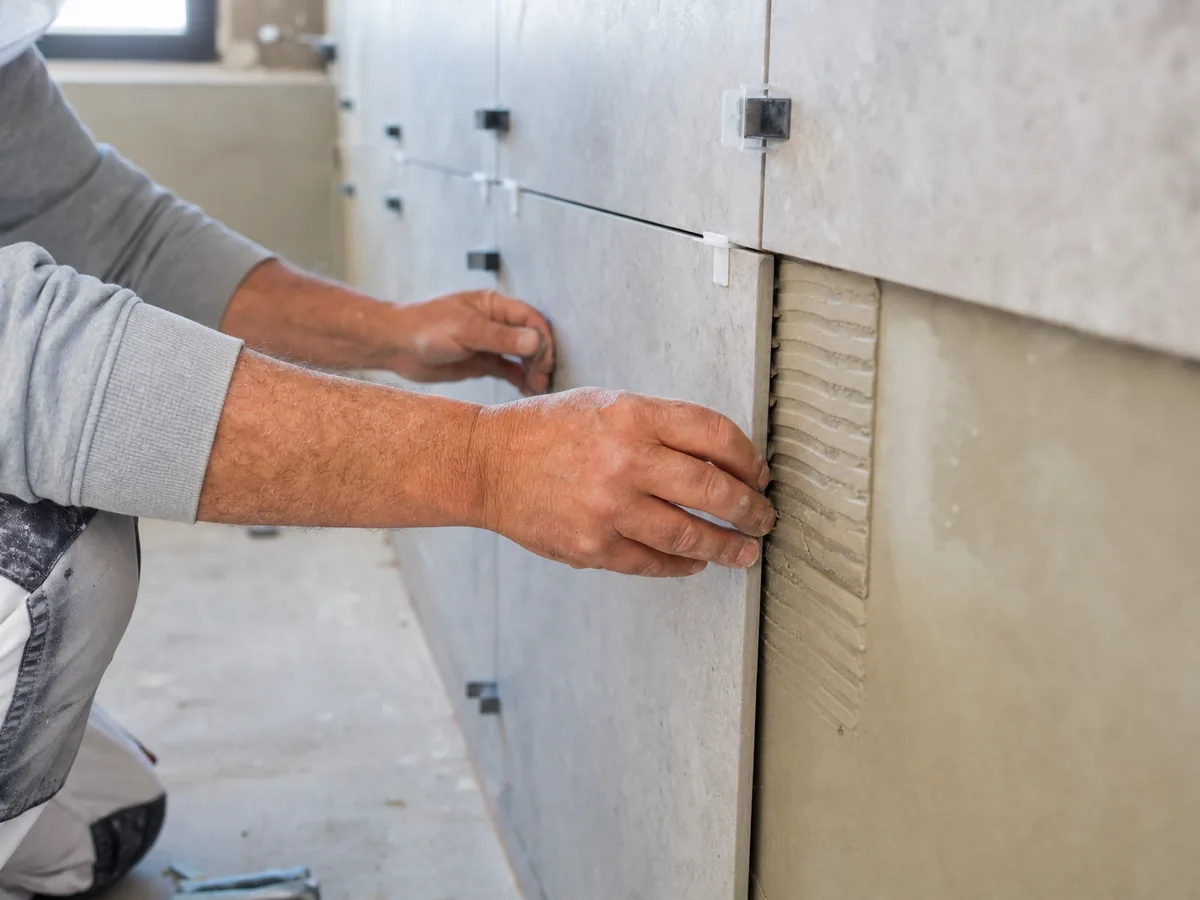
- Porcelain (stoneware): The all-terrain vehicle. Waterproof, very durable, and perfect for underfloor heating; somewhat cold to the touch.
- Laminate flooring: Warmth of wood at a low price and quick floating installation; sensitive to water.
- Parquet / natural wood: The most noble and comfortable option, but the most demanding in terms of maintenance and resistance to humidity.
- Microcement: seamless, modern finish; requires periodic sealing and very careful execution.
- Vinyl / SPC: Warm, quiet and waterproof, with click installation without construction work; ideal for quick renovations.
How much does each floor cost per square meter in 2026?
Price is the deciding factor in almost every renovation. These are the price ranges for materials plus professional installation in 2026, ordered from the most economical to the most expensive option based on finish. Keep in mind that removing the old flooring adds between €8 and €15/m² to the cost of the project when necessary.
- Laminate flooring: from €20 to €45/m² installed; high-traffic AC5 ranges are around 33-59 €/m², with the laminated material starting from barely 7-10 €/m².
- Vinyl / SPC: between €25 and €55/m² installed, depending on the reference and community.
- Porcelain: between €30 and €70/m², although large premium formats can exceed €85/m².
- Microcement: between 40 and 90 €/m², conditioned by the number of hands and the skilled labor.
- Natural wood parquet: between 30 and 90 €/m² installed according to the species and finish.
At Tecnic Project we work with fixed labor price and a 10% discount on materials, so you know from day one how much you'll pay for your new floor, with no surprises halfway through construction.
Which floors best withstand the humidity of a house by the sea
The best at tolerating water are porcelain and vinyl/SPC, followed by well-sealed microcement. Porcelain has no pores to retain moisture, so it neither warps nor stains; that's why it's the go-to choice for kitchens and bathrooms. Laminate flooring and parquet, on the other hand, are very sensitive to humidity and they can bulge.
In Mallorca, this is no small matter: in homes near the sea or on ground floors with rising damp, installing wood without proper care leads to warping within a few years. If you're tempted by the warmth of wood in a bathroom, take a look at our comparison first bathroom flooring and the one of kitchen floor, because in those rooms, the humidity decides for you.
Which floors are compatible with underfloor heating
Porcelain and microcement are compatible with the 100% because they conduct and distribute heat very well due to their mass; vinyl flooring and laminate flooring are also compatible, but only in specifically approved ranges and with temperature limits. Solid wood is the worst match for radiant heating because of its movement with temperature changes.
If you're considering underfloor heating, the flooring affects the system's performance: ceramic materials make better use of the air conditioning efficiency low energy consumption. Before deciding, you should read Underfloor heating vs. air source heat pump, because choosing flooring and a heating system at the same time saves money and construction work.
Flooring comparison: porcelain, wood, microcement and vinyl
This table provides a quick overview of the five flooring options and highlights the factors that truly matter when choosing flooring for a renovation. Use it as a quick guide and delve into the details in the sections above.
| Floor | Installed price 2026 | Endurance | Humidity | Underfloor heating | Maintenance | Construction site |
|---|---|---|---|---|---|---|
| Porcelain (stoneware) | 30-70 €/m² | Very high | Excellent | Optimum | Minimum | It usually requires removing the old floor. |
| Laminate flooring | 20-45 €/m² | Medium-high | Low | Compatible ranges only | Easy | Floating, often without work |
| Parquet / wood | 30-90 €/m² | Average | Low | Limited | Demanding (varnished) | With work and gluing |
| Microcement | 40-90 €/m² | Medium-high | Good (sealed) | Optimum | Sealed every 2-3 years | Without lifting, on top of the existing one |
| Vinyl / SPC | 25-55 €/m² | High | Good | Compatible (ranges) | Very easy | Click, no work |
What flooring should I put in each room of the house?
There is no single winner, but rather a smart distribution. For a full renovation in Mallorca this is the criterion we apply:
- Kitchen and bathrooms: Porcelain or microcement, due to their impermeability and ease of cleaning. If you're looking for visual continuity, the microcement in renovations it gives a very modern finish.
- Hall and corridors: Porcelain if you prioritize hardness, or vinyl/SPC if you want warmth and less footstep noise.
- Bedrooms: Laminate or vinyl flooring, for comfort when walking barefoot and a good price.
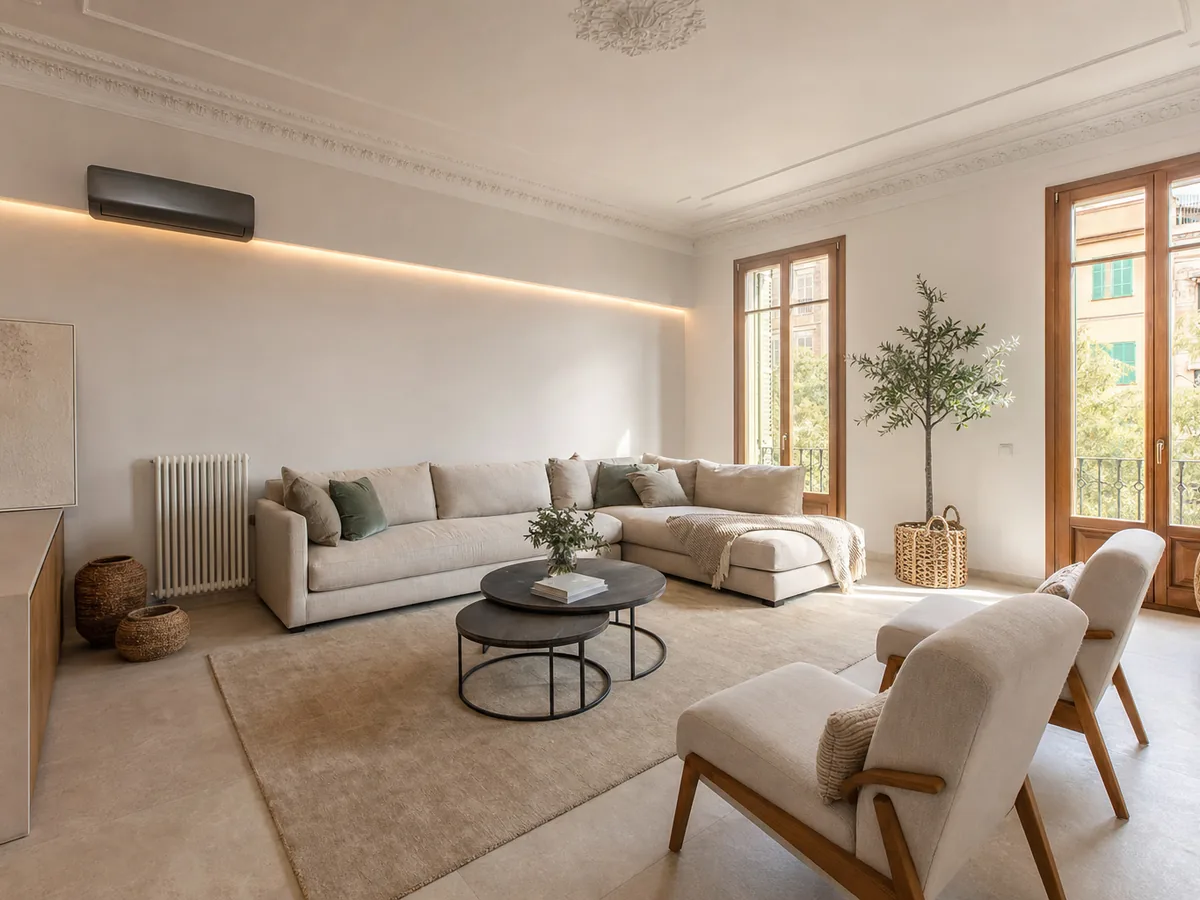
- Entire house with minimalist aesthetic: continuous microcement, assuming its periodic sealing.
Depending on your needs: if you have children, pets, or rent out your home, go for porcelain or SPC tiles; if you're looking for maximum comfort and are willing to maintain it, natural wood remains unbeatable to the touch.
Frequently asked questions about choosing the right flooring for a renovation
Which flooring is best for a renovation with underfloor heating?
Porcelain tiles and microcement are the best flooring options for a renovation with underfloor heating because their mass conducts and distributes heat evenly and withstands temperature fluctuations without warping. Vinyl/SPC flooring and laminate flooring are also suitable, but only in ranges approved for underfloor heating. Avoid solid wood, as it moves with heat. Choosing the right flooring improves the system's performance and reduces your energy bill.
What is the cheapest flooring for renovating an entire house?
Laminate flooring is the cheapest option for renovating an entire house, with installed prices starting at around €20/m² in 2026, followed by vinyl/SPC. Furthermore, both are installed as floating floors using a click system, often without removing the existing flooring, which reduces costs and construction time. They offer the best value for money for bedrooms and areas with minimal contact with water.
Can I install new flooring without removing the old flooring?
Yes. Microcement is applied directly over the existing floor (tile, stoneware, or cement) without demolition, and laminate and vinyl/SPC flooring are installed as floating floors on top, provided the subfloor is level and firm. Porcelain tiles can also be installed over the old floor in some cases, although it's more common to remove it. Avoiding demolition reduces debris, dust, and installation time, which is very practical in occupied homes.
Which type of flooring best withstands humidity in a home in Mallorca?
Porcelain tiles withstand humidity better in a Mallorcan home because they are non-porous and do not absorb water or salt, making them ideal near the sea or on damp ground floors. Vinyl/SPC tiles, which are waterproof due to their composition, and well-sealed microcement are next in line. Laminate flooring and wooden parquet are the most vulnerable: they warp in the high humidity common on the island.
How long does each type of flooring last after a renovation?
Porcelain tile is the most durable: it can last for decades without losing its performance. Microcement and quality vinyl/SPC flooring last around 15-20 years with proper maintenance. Laminate flooring typically needs replacing every 10-15 years depending on foot traffic, while hardwood parquet can last a lifetime if it is sanded and varnished regularly. Durability depends on both the material and proper professional installation.
When is it NOT advisable to install natural wood decking?
Wood is beautiful, but it's not always the right choice. Avoid it if:
- You're going to put it in kitchen, bathroom or laundry roomHumidity and splashes deteriorate it quickly.
- Have capillary action or you live very close to the sea without a vapor barrier.
- Want high-temperature underfloor heatingSolid wood moves and cracks.
- You're looking for minimal maintenance Or if you rent the property: ask for varnishing and maintenance that not everyone will take care of.
In these cases, a porcelain tile with a wood effect gives you the aesthetic of decking with the resistance of stoneware, a combination that is a success in many Mallorcan renovations.
Still unsure which flooring to choose for your renovation?
Choosing the right flooring is half the renovation, and deciding which flooring to choose for a renovation It's much easier when someone with experience looks at your home, your budget, and your priorities. At Tecnic Project, we're a family business with over three generations of experience renovating homes in Mallorca. We offer fixed labor prices, a one-year warranty on the renovation and two years on materials, and financing up to 100% of the total cost. Contact us via WhatsApp or fill out the form, and we'll advise you with no obligation.