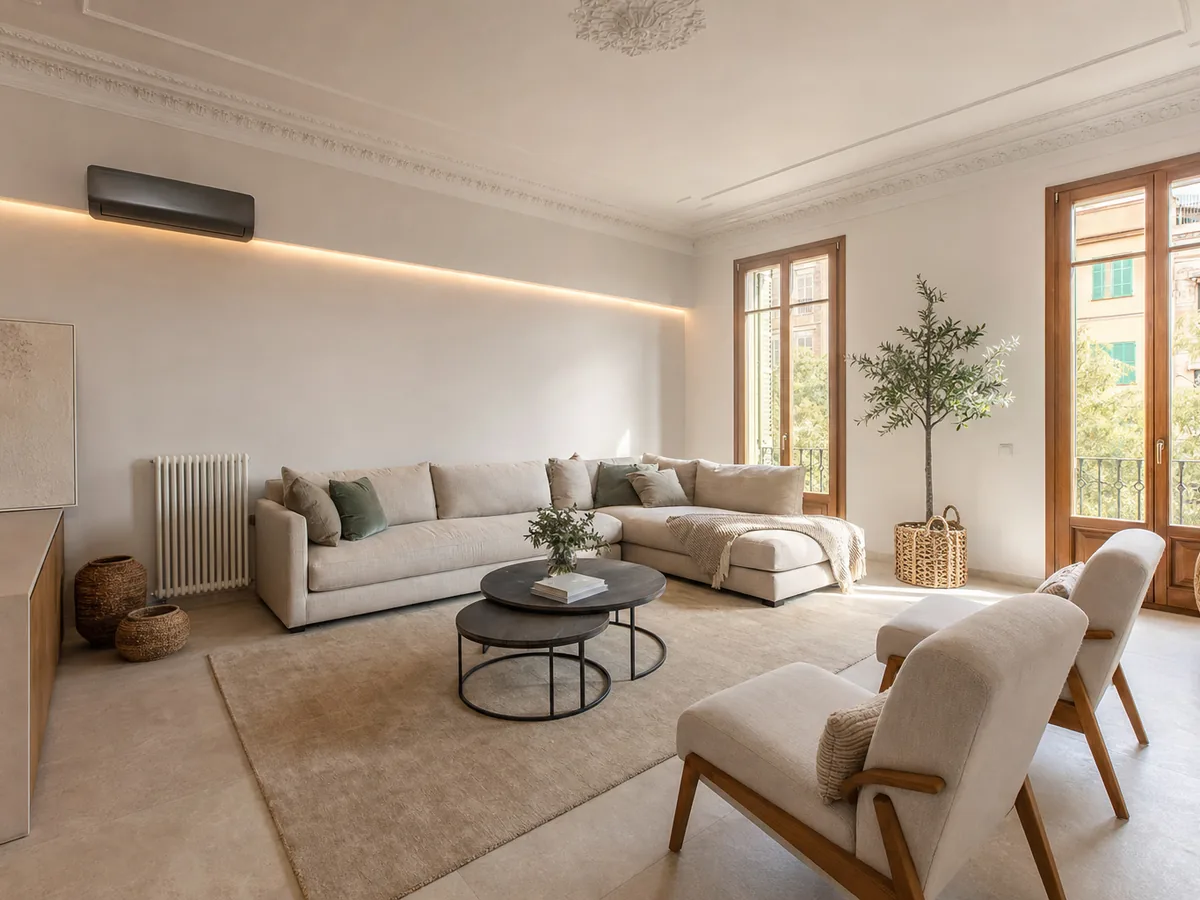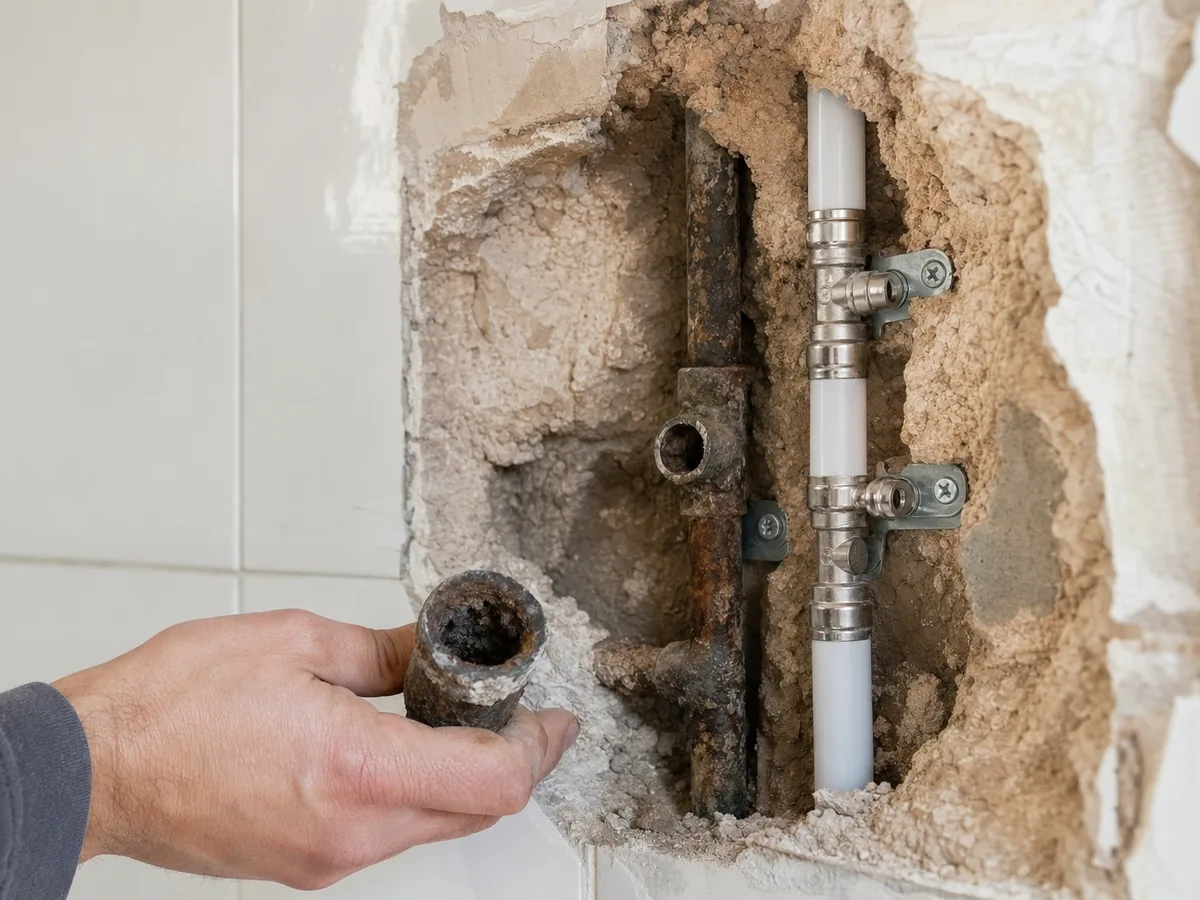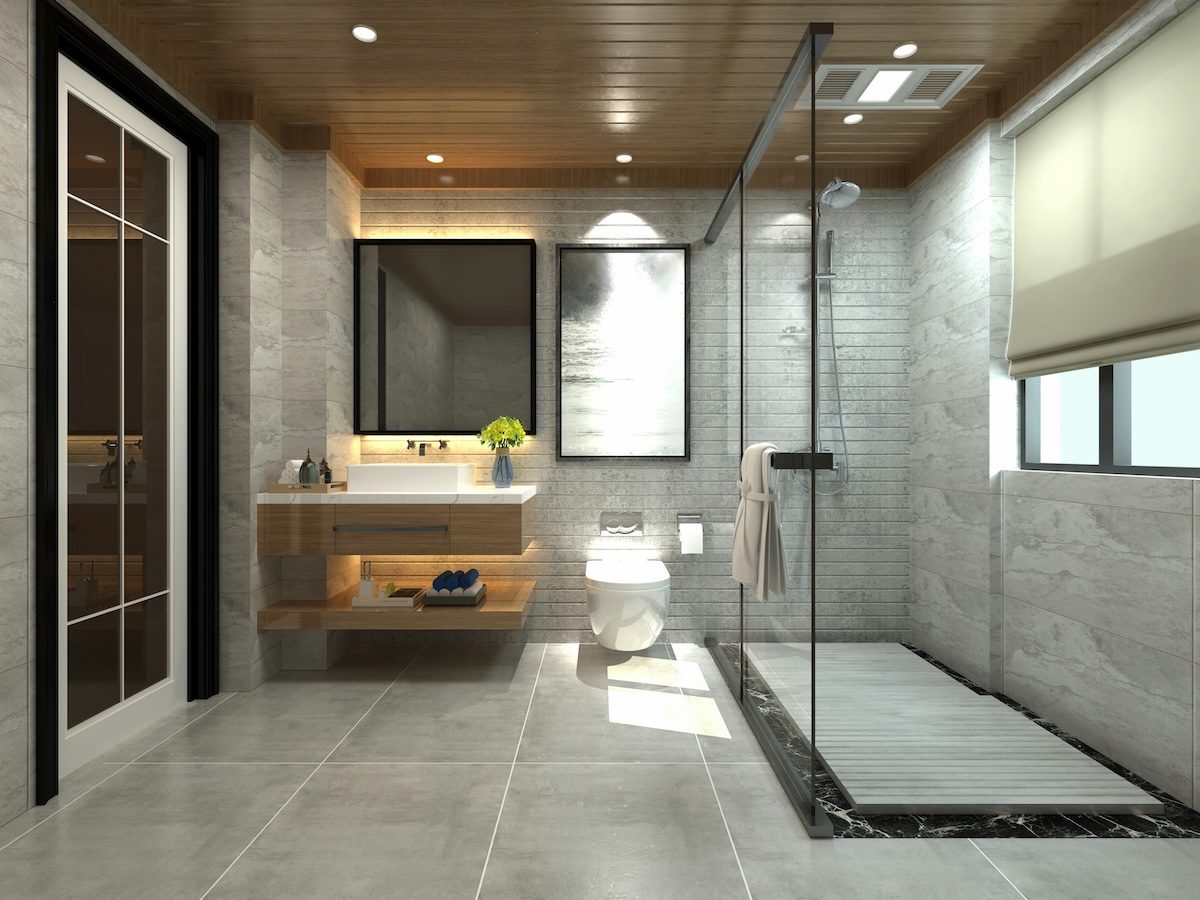
A 3D rendering is a photorealistic, computer-generated image that shows how a space will look after renovation, using real materials, lighting, and furniture. In a renovation, it helps you make decisions before spending money: see what the new kitchen will look like, check if the color scheme works, assess whether the furniture will fit where you planned, and whether the natural light will be as expected. A high-quality 3D rendering for a private home costs between €200 and €1,500 in Spain and can save you thousands of euros in construction errors. Here we explain exactly what it is, how it's created, the different types available, and when it's worth ordering one before starting your renovation.
What is a 3D render?
A 3D rendering is a photorealistic graphic representation of a project generated using specialized modeling and rendering software. It starts with a three-dimensional model of the space and accurately simulates lighting, materials, shadows, and textures to produce an image that looks like a photograph of the finished space. In architecture and interior design, it's used as a visualization tool: before knocking down a wall, buying furniture, or choosing flooring, the client can see how everything will look.
What is the purpose of a 3D rendering in a home renovation?
To make decisions based on real visual information instead of blindly imagining things based on blueprints. These are the most useful functions in a residential renovation:
- Validate the overall design before starting construction: layout, color, lighting, materials
- Compare several options (light vs dark floor, white vs black countertop, front vs side wall cabinet) on the same base image
- Detecting proportion problems that are not visible in a 2D plan (furniture that visually crushes the room, windows that are too small, heights that don't work)
- Communicate the project to the family without having to explain technical details of the plans
- Request exact quotes from suppliers because the rendering specifies materials, finishes, and furniture format.
- Avoid costly changes mid-construction — modifying a decision on a rendering costs nothing, doing so with the kitchen already installed costs a lot
- Processing permits in some cases (city councils, homeowners associations, boards of listed buildings) where an image helps to understand the scope
If you're still not sure when they fit into your project, you'll be interested in our article about 3D renderings: the key to visualizing your renovation before you start.
How to do a 3D render step by step
- Taking actual measurements of the space to be renovated (manually, with laser or on existing plans)
- 3D modeling of the space in CAD/BIM software (SketchUp, Revit, Archicad, 3ds Max or equivalent)
- Application of materials to each surface: floor, walls, countertop, furniture, textiles
- Virtual lighting of the model: natural light according to orientation and time of day + planned artificial light
- Rendered using a calculation engine (V-Ray, Corona, Lumion, Enscape, Cedreo) that processes the final image
- Post-production in Photoshop or equivalent for adjustments to color, contrast and final detail
- Deliver to the client high-resolution images and views of the space from various angles
The usual delivery time for a standard residential project is 3 to 7 working days from when the materials and furniture are finalized.
Types of 3D rendering used in renovations
| Guy | When to use | Indicative cost |
| Photorealistic static render | The most common option — one picture of each key room | €200 – €600 per image |
| Conceptual or stylized render | Early project phase, without final level of detail | €100 – €250 per image |
| 360° render or virtual tour | Immersive visualization, navigable from the browser | €400 – €1,200 per stay |
| Animation or video rendering | A "walking" type tour of the house | €1,500 – €5,000 per minute |
| Rendering with generative AI | Fast and economical version, less detail control | €30 – €150 per image |
For a typical home renovation, it's common to request two to five photorealistic static renderings of the key rooms (kitchen, living room, main bathroom, master bedroom). This is sufficient to make well-informed decisions without exceeding the budget.
How much does a 3D render cost in Spain?
Prices for 3D interior renderings in Spain range from €50 to €2,000 per image, with the following indicative reference:
- Simple individual render (one room, standard quality): €200 – €250 per image
- High-quality photorealistic rendering (complex room, detailed furniture, careful lighting): €400 – €800 per image
- Complete single-family home (multiple rooms as a package): €500 – €1,500 per project
- 100m² apartment with technical assistance during construction: ~€1,000 per complete project
- Complete residential buildings (facade + various interiors): €1,000 – €3,000
When the rendering is done by the architecture firm or renovation team itself as part of the project, the cost is usually already included in the fees and is not billed separately. At Tecnic Project, as renovation company in Mallorca, this is how we work: if you commission the renovation with us, the visualizations are part of the preliminary design process.
Differences between a 3D rendering, an infographic, and a technical drawing
Three concepts that are often confused but are not the same:
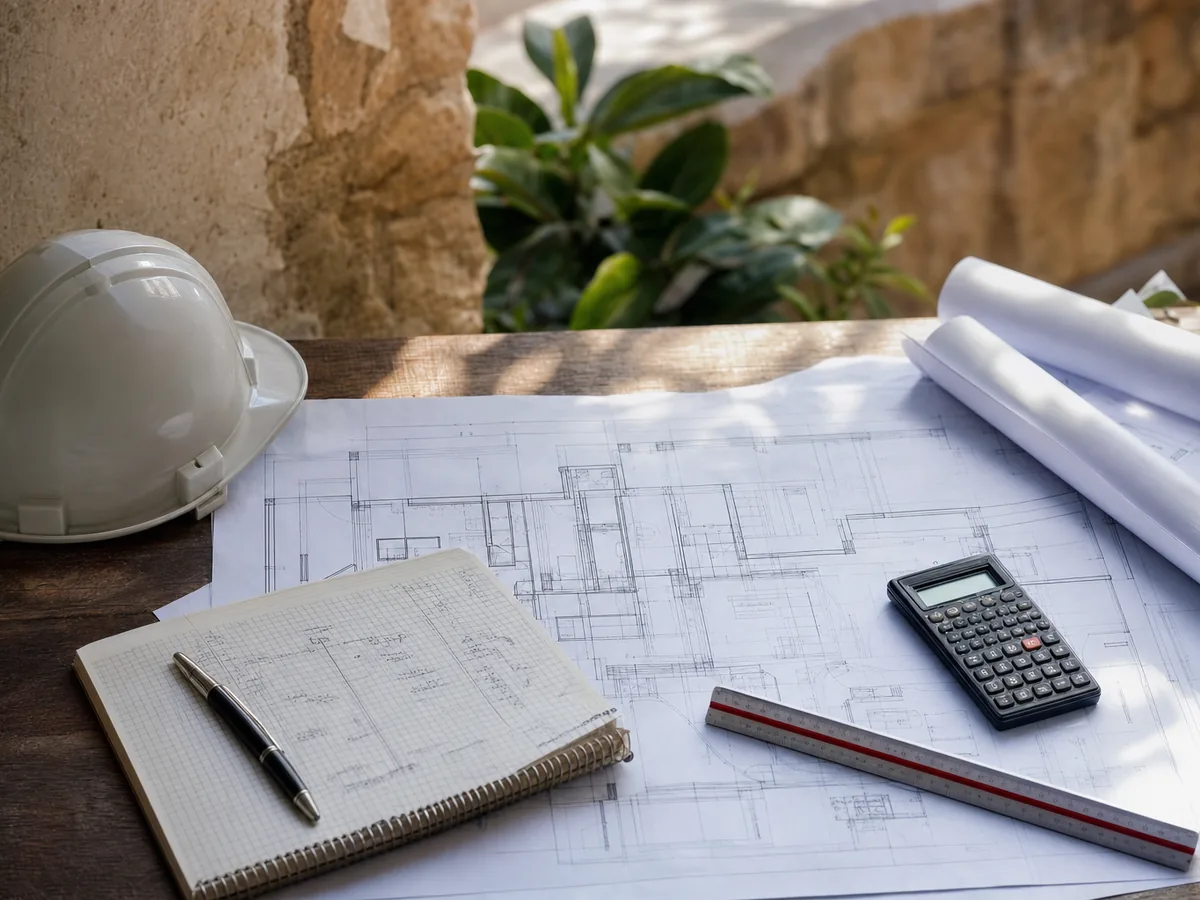
- Technical drawing (2D plan): floor plan, elevation, and sections with precise dimensions. It's used for construction, not visualization. It's what the construction worker uses to carry out the work.
- Infographic: An illustrative image, not necessarily photorealistic, that communicates a conceptual idea. It can be a colored sketch, a stylized isometric view, or a diagram.
- Photorealistic 3D rendering: an image that looks like a photograph of the finished space, with realistic materials, lighting, and proportions. It's useful for planning before construction.
A good residential renovation uses all three: plans to execute, infographics or sketches to brainstorm, and photorealistic renderings to validate before touching anything.
Common mistakes when requesting a 3D render
- Requesting a rendering before making any decisions—if you don't know what kind of flooring or kitchen you want, a rendering won't help you. It's useful for validating decisions, not for making them from scratch.
- Mistaking a rendering for a commitment to the actual result — if the suppliers aren't going to use those exact materials, the rendering misleads expectations
- Commissioning renderings of every room "just in case" multiplies the cost without adding value. It's better to focus on the 3-4 key rooms of the renovation.
- Not checking the virtual lighting against the real-world orientation — a render with midday light in a room that only receives morning light is misleading.
- Don't expect absolute photorealism without paying for it—budget renders in the €100-€200 range are useful but don't look like photos. If you need photo-quality results, increase your budget.
- Do not request multiple views of the same space — a single image does not capture the true dimensions of the place.
If you're in the preliminary design phase of a renovation and need to make a good decision, it's advisable to combine the rendering with interior design in Mallorca to ensure consistency between what you see and what is executed.
Frequently asked questions about 3D rendering in renovations
Is it mandatory to create a 3D rendering before a renovation?
No. A 3D rendering is a visualization and decision-making tool, not a legal or technical requirement for renovations. Some renovations can be carried out perfectly well without renderings, especially when they are small or when the client already has a clear vision of the final result. That said, for comprehensive or larger-scale renovations, we recommend using a rendering: the cost of the rendering is negligible compared to the cost of fixing a mistake during construction.
How long does it take to create a 3D rendering of a house?
The typical timeframe for a standard residential project is 3 to 7 business days from the time materials and furniture are finalized. If the client changes decisions mid-process, the timeframe extends—each complete revision can add 1 to 3 days. To expedite the process, it's best to arrive at the studio with materials and furniture already selected or with a very specific brief. AI-generated renderings can be delivered in hours, but offer less control over the details.
Is it possible to create a 3D rendering of just the bathroom or just the kitchen?
Yes. It's the most common approach for partial renovations. The rendering focuses on the room being transformed, and the cost is lower compared to a complete home renovation. For a kitchen or bathroom with a good level of detail (real materials, specific furniture, carefully considered lighting), the cost is usually between €250 and €600 per room in 2026. It's the most cost-effective investment when you're going to buy expensive furniture: seeing how it will look beforehand prevents regrets.
What is the difference between an AI-generated render and a traditional one?
A traditional rendering starts with a real-world model of the space (exact measurements, actual materials, calculated lighting) and produces a realistic image. A generative AI rendering starts with a base image or descriptive text and quickly generates an aesthetically pleasing image, but with less precision: measurements aren't exact, materials are approximate, and lighting is subjective. For initial inspiration, AI is very useful. For deciding on colors, materials, and furniture with a purchase commitment, a traditional rendering is preferable.
Are you planning a renovation and want to see the results beforehand?
If you are planning a full renovation in Mallorca and you want to make well-informed decisions, 3D rendering is the tool that offers the best return on investment. At Tecnic Project we use 3D visualization throughout the design process so you can see the renovation before we begin. Request a free technical visit and we'll explain how it fits into your project.