Let's be honest, renovating a kitchen can be daunting. It's the space where you cook, chat, have half a breakfast, and occasionally experience frustration when something breaks down. That's why, when considering a complete kitchen renovation in Mallorca, it's normal to have questions about budgets, materials, and where to begin. As you can see, it's more common than you might think.
The key is understanding that it's not just about changing the furniture. It's about regaining comfort and making the kitchen more practical for your daily life. If you're looking for a clear guide, with real-life examples and no beating around the bush, you've come to the right place. Here you'll see how everything starts to fall into place.
How much does a complete kitchen renovation cost?
When someone considers a complete kitchen renovation in Palma de Mallorca, the first question they ask is how much it might actually cost. And that's normal.
Ultimately, we're talking about one of the most used rooms in the house, where every decision, no matter how small, can affect the budget. The truth is, there's no universal figure, because every kitchen has its own quirks, size, and needs.
Renovating a 6 m² kitchen in an older apartment is not the same as modernizing an open-plan kitchen in a larger space. Between furniture, countertops, appliances, plumbing, electrical work, and labor, prices can vary considerably.
How to plan a kitchen renovation without making mistakes
Planning a kitchen renovation seems simple until you get down to business. That's when the doubts creep in: will the cabinets fit? Is the countertop too close to the window? Is there a missing outlet right where you need it most? The truth is, good planning prevents more problems than you might imagine.
And it's not just about looking at pretty pictures, but about understanding how you use your kitchen on a daily basis.
By the way, before making any decisions, it's worth thinking about the small details that make all the difference. Simple things like where you usually make your coffee, the space you need to cook comfortably, or whether you mind having appliances in plain sight.
Let's look at the key points to keep in mind so that you don't miss anything.
Measure the space carefully before making decisions
Measuring a kitchen isn't just about taking out a tape measure and calling it a day. You have to pay attention to hidden pillars, actual heights, doorways, and even how far the drawers open.
Those millimeters that sometimes seem insignificant can determine whether a piece of furniture fits or bumps into the radiator. Ideally, you should make a simple plan and note down exact measurements. That way, when you start choosing furniture and appliances, you'll know exactly what fits and what doesn't, avoiding last-minute surprises.
Choose the most practical layout (L, U, linear or island)
The layout makes all the difference. An L-shaped kitchen works very well in small apartments, while U-shaped kitchens offer great flexibility if you're looking for storage. Linear kitchens are perfect when there's no room for creative solutions, and if you have plenty of space, an island is a real treat for cooking and chatting at the same time.
To be honest, what's important is being able to move around without bumping into anything and having the work areas close together. That's where real comfort lies.
Plan for outlets, lighting, and appliances
This is where most mistakes are made. There's no outlet right where you put the coffee maker, the light casts a shadow on the cutting area, or the oven is too high. That's why it's best to plan everything before finalizing the design.
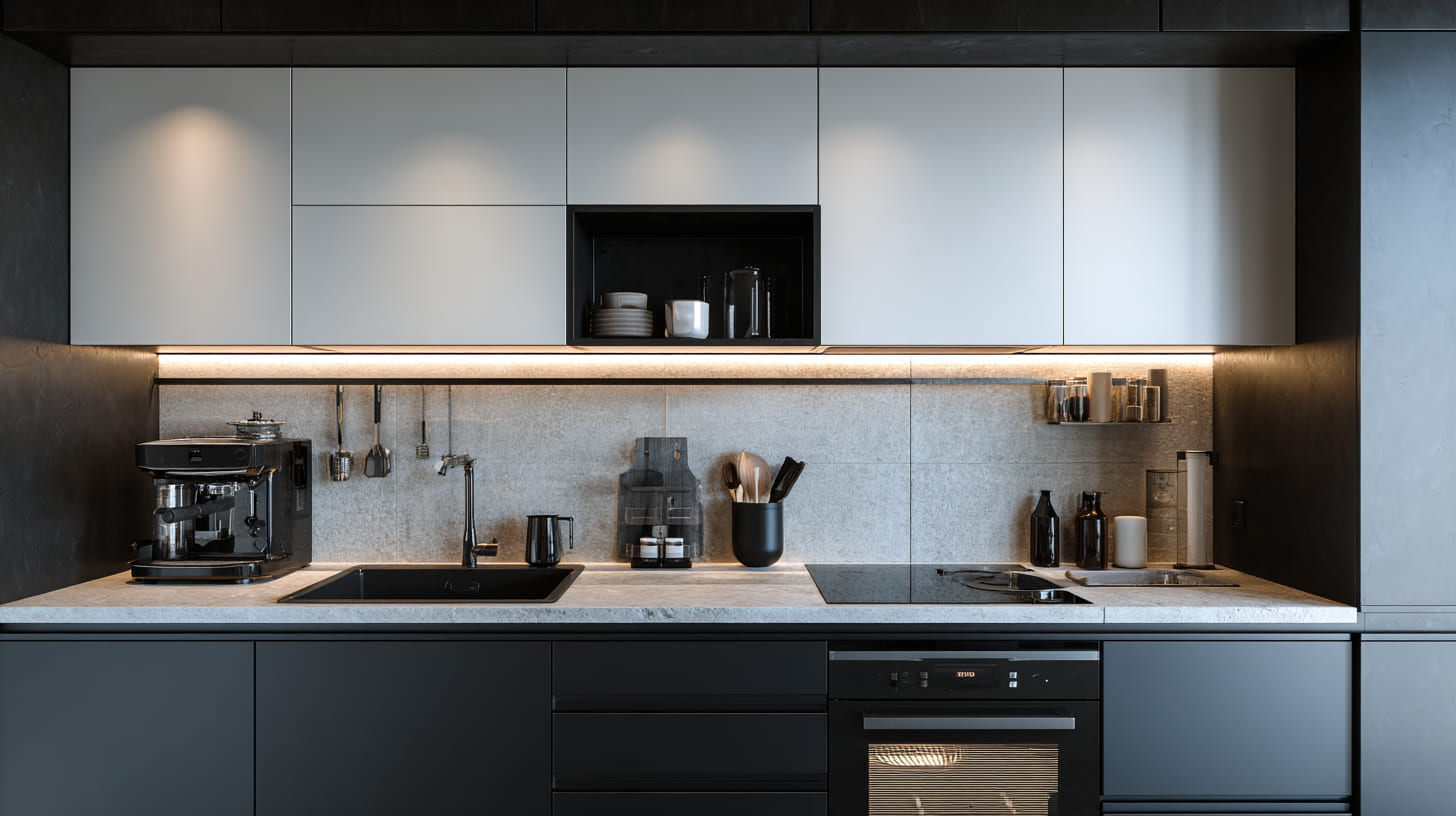
Make a list of what you use daily and place it on the floor plan. Then think about functional lighting, not just decorative lighting. Good lighting under wall cabinets, for example, makes a big difference.
Permits required for a kitchen renovation in Spain
When someone embarks on a kitchen renovation, sooner or later the same question arises: what permits do I really need? And of course, between municipal regulations, minor works permits, and licenses… it's easy to get lost.
Let's be clear and straightforward. The reality is that most kitchen renovations fall under the category of minor works, but there are specific cases where something more substantial is required. It largely depends on what you're working on: installations, partitions, the facade, or common elements.
By the way, not all town halls operate the same way. Some municipalities require prior notification, while others demand a minor works permit, even if you're only making minor changes.
- Changing furniture: usually does not require a license.
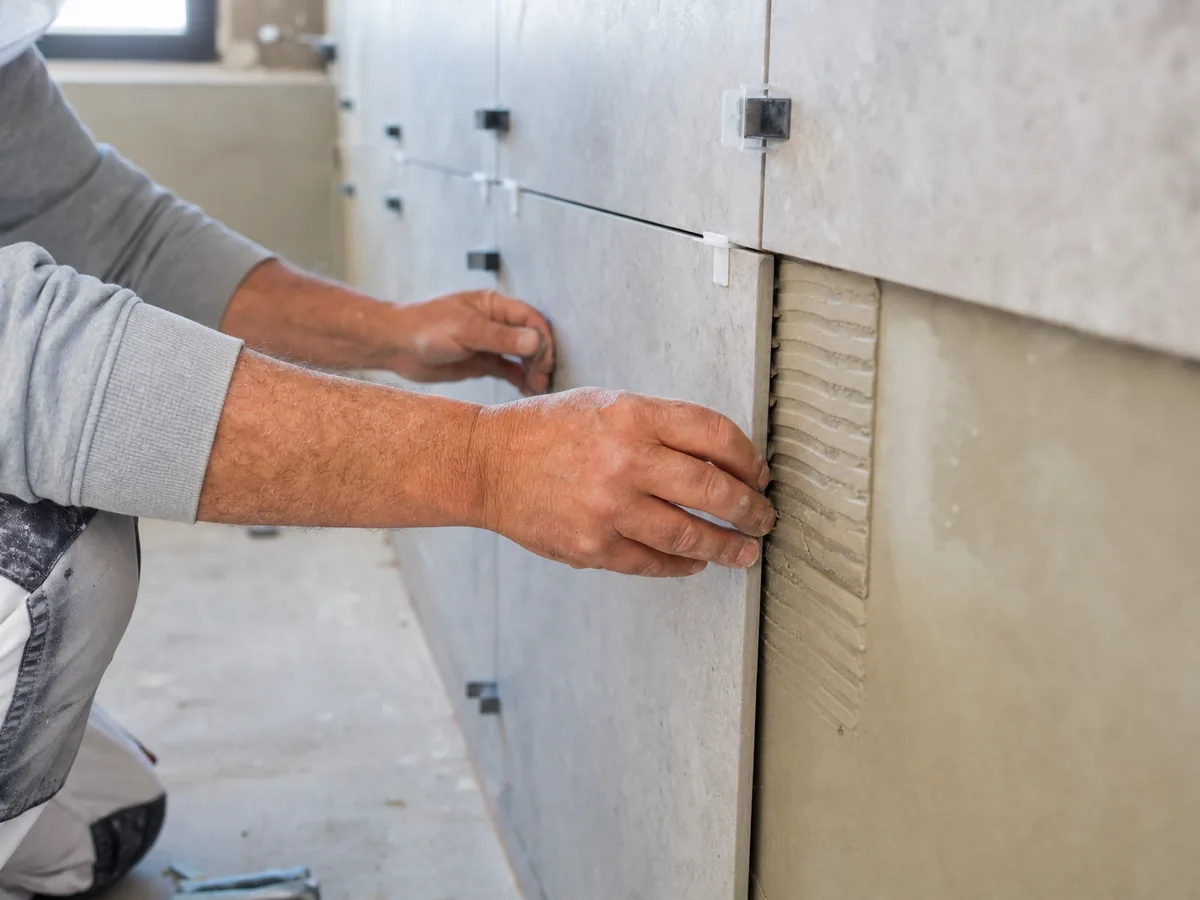
- Replacing tiles, flooring or countertops: prior notification or minor works permit.
- Modifying plumbing or electricity: minor work.
- Tearing down or building partitions: minor or major work, depending on whether they are structural or not.
- Affecting facades, openings or common elements: major works permit.
- In communities: if you touch something that is shared, you also need permission from the community.
Let's now get to the key details.
When prior communication is sufficient
Prior notification is the simplest option. It's used for straightforward renovations: changing tiles, renewing the flooring, replacing furniture, or updating the countertop. Typical work for a standard kitchen.
You usually submit a form, pay small fees, and start almost immediately. The important thing is that you don't affect the structure or common areas.
When do you need a minor works permit?
This includes slightly more serious work: moving water points, changing electrical wiring, modifying ventilation, or building small, non-structural partitions. A minor works permit requires more documentation, though nothing excessive. It usually includes a project budget and a simple plan.
Cases that require a major works permit
Major construction work is only required in a few specific situations: altering load-bearing walls, enlarging window openings, modifying the facade, or changing anything that affects the building's structure. In these cases, a technical project signed by an architect is required, as well as approval from the homeowners' association if there are shared elements.
At Tecnic Project, we specialize in kitchen renovations in Mallorca
Ultimately, deciding on a complete kitchen renovation in Mallorca is a mix of necessity and a desire for a better quality of life at home. When the cabinets are worn out, the plumbing and electrical systems are failing, or you simply notice that the kitchen is too small for your daily routine, it's usually time to take the plunge.
A well-done kitchen renovation not only modernizes the space, but also makes your life easier and improves the value of your home.
If you need an experienced team to review your project and guide you without obligation, at Tecnic Project, specialists in kitchen renovations in Mallorca, we are here to help you from the very first step.